
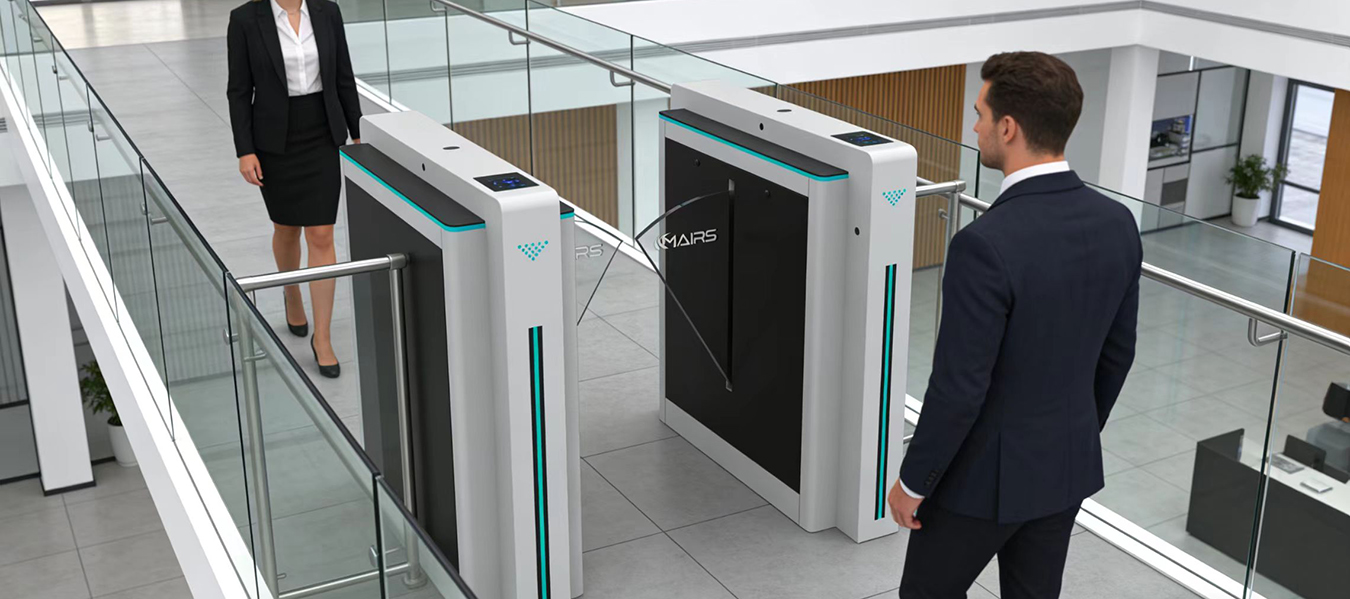
If you have walked through a sleek, fast-opening security gate in a modern office lobby, subway station, airport or commercial building, chances are you have used a flap barrier turnstile. It is one of the most popular waist-height pedestrian access control turnstile gates designed to manage people flow while keeping unauthorized visitors out.
What is a flap barrier turnstile?
A flap barrier turnstile, also widely called a flap barrier gate or flap barrier, is a modern automatic pedestrian access control turnstile gate designed to regulate one-way or two-way foot traffic. Unlike traditional tripod turnstiles with rotating metal arms, it uses retractable transparent or solid wings (flaps) that tuck neatly inside the cabinet after valid authentication. It only grants passage to authorised users and stops unauthorised entry, tailgating and backtracking. Thanks to its clean, premium look and fast operation, the flap barrier security gate has become one of the most popular access gates for commercial and public indoor spaces.
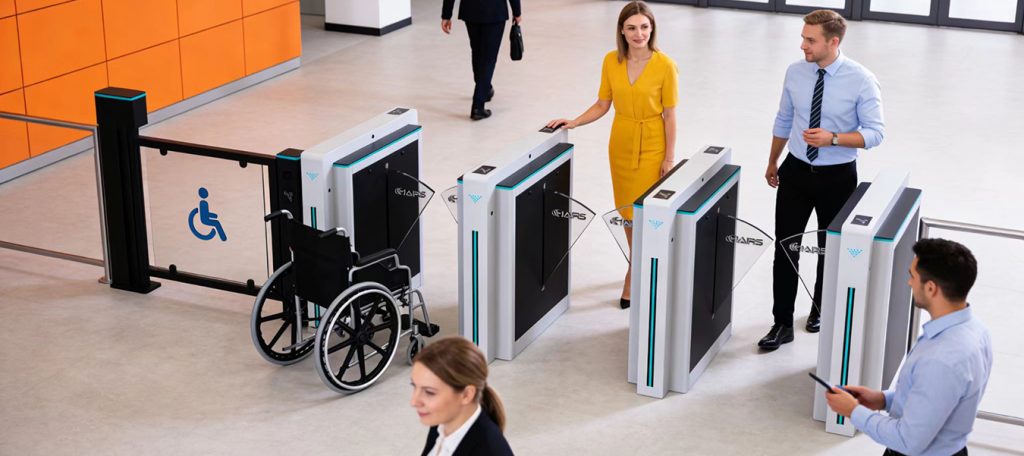
Unlike tripod turnstiles with rotating arms or full-height turnstiles with solid enclosures, flap barriers are valued for their quiet operation, clean modern look and high throughput. They are widely preferred for indoor high-traffic locations where security and visitor experience both matter. Most standard models support 30–45 people per minute, and custom wide lanes can accommodate wheelchairs, strollers and bulky luggage.
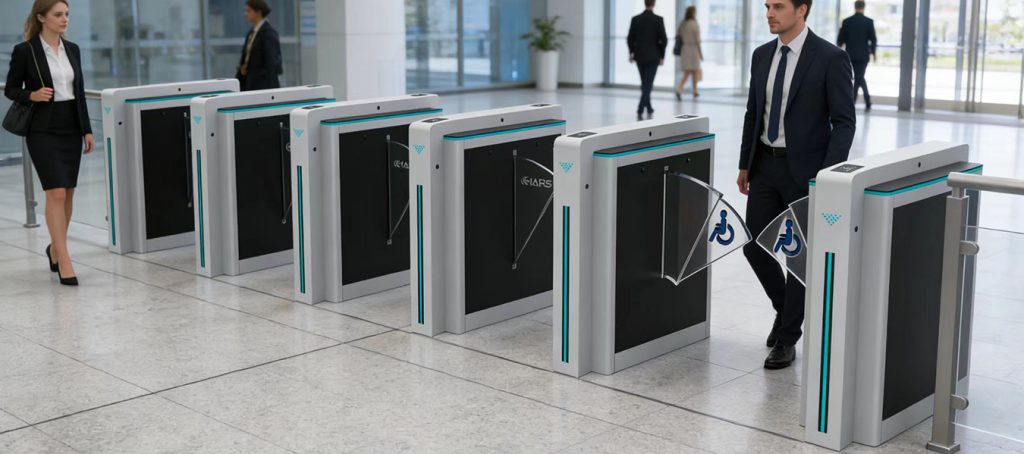
When to choose a flap barrier instead of other turnstiles?
Pick a flap barrier turnstile when your client prioritises fast pedestrian flow, a clean modern entrance look, reliable anti-tailgating security, and they are installing the gate indoors. If the project has high foot traffic, wants a premium lobby appearance and needs integration with access control software, the flap barrier gate is usually the best fit.
On the other hand, choose tripod turnstiles for tight budgets, rough outdoor sites or low-traffic locations. If you need even higher security against climbing or jumping, full-height turnstiles will be more appropriate. For security distributors, matching the site environment, traffic volume and budget to the turnstile type is the key to a successful access control project.
Core components inside a flap barrier turnstile
A flap barrier turnstile consists of two cabinet housings with retractable wing panels, commonly made of tempered glass, acrylic or polycarbonate. When closed, the flaps extend out to block the passage lane. Once a valid access credential is verified, the flaps retract smoothly and quickly into the cabinets to create an open path. After the authorized person passes fully through the lane, the wings extend back to the closed position automatically.
To understand how it works, it helps to break down its key parts:
- Main control board: The brain of the turnstile. It receives verification signals from readers, processes rules such as anti-passback and tailgating alerts, and sends commands to the motor drive.
- Brushless servo motor: Drives the retractable flaps. High-quality brushless motors deliver fast, soft and low-noise movement with less wear for long-term daily use.
- Multi-pair infrared sensor array: Installed along the passage lane. Sensors track pedestrian position, detect tailgating, prevent pinching and trigger automatic reset after passage.
- Access reader interface: Compatible with RFID cards, QR codes, face recognition, fingerprint scanners and mobile access credentials. It supports standard protocols like Wiegand, RS485 and TCP/IP for easy integration with access control systems.
- Alarm and emergency release module: Triggers alerts for forced entry, tailgating or invalid access. For fire safety, the flaps retract fully and stay open when receiving an emergency signal, allowing free evacuation.
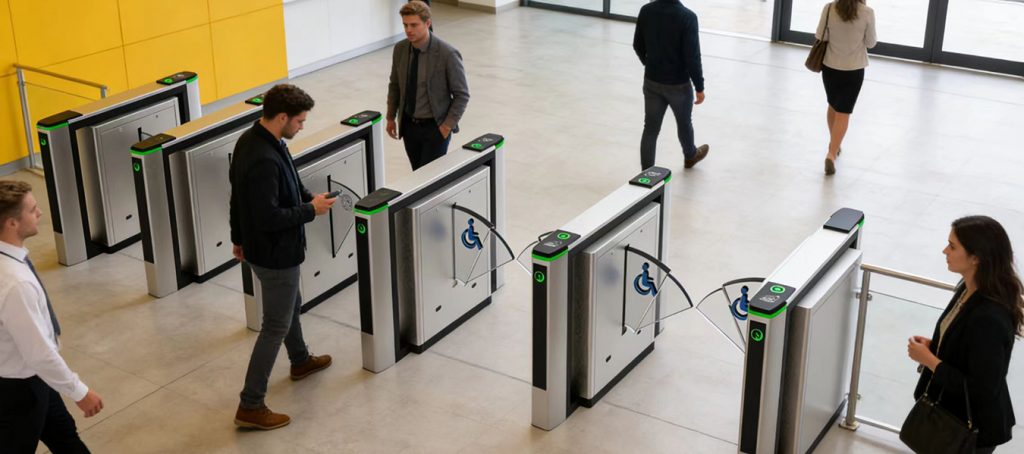
Step-by-step: How a flap barrier turnstile works
The whole cycle happens in just a fraction of a second, and follows a clear sequence:
- User authentication: An authorized person presents their credential to the reader mounted on or beside the turnstile. The reader checks the ID against the access database.
- Access approval: If the credential is valid, the system sends an opening signal to the control board. If rejected, the flaps stay closed and an alert may activate.
- Flap retraction: The servo motor pulls both wings horizontally back into the cabinet, opening the lane. Good models have soft-start and anti-collision protection to avoid hitting users.
- Sensor monitoring during passage: Infrared beams continuously monitor the lane. The system can tell if only one person enters per valid swipe, and flag tailgating where a second person tries to follow closely behind.
- Automatic closing: Once the sensors confirm the pedestrian has completely exited the lane, the control board commands the flaps to extend back to the closed barrier position.
- Reset for next user: The gate returns to standby status, ready for the next authentication request.
Where are flap barrier turnstiles used?
Thanks to the balance of security, speed and aesthetics, flap barriers fit many scenarios, flap barrier gates are widely deployed in pedestrian access control projects:
- Corporate offices: Main lobby entrances to manage employee entry, visitor check-in and secure restricted floors.
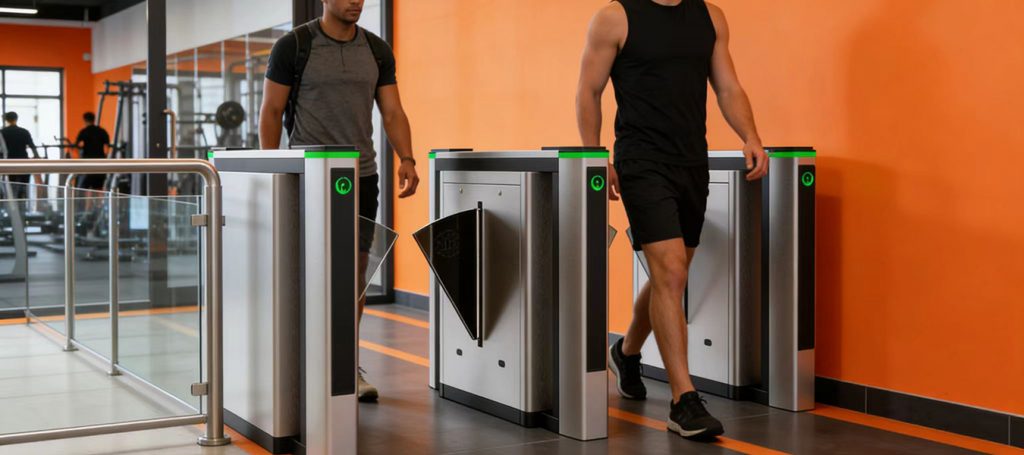
- Gyms and fitness centres: Verify memberships and stop non-members from entering workout zones.
- Transit and stations: Ticket-checking lanes for light rail, metro and bus station concourses.
- Schools and universities: Control student and staff flow at campus buildings and libraries.
- Stadiums and exhibition halls: Fast ticket validation for large crowds before events.
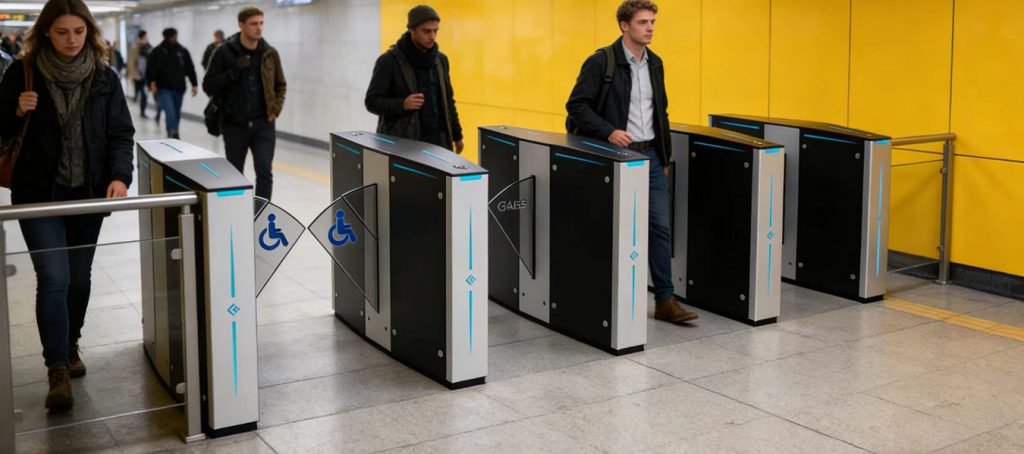
Key advantages of flap barrier turnstiles
- Strong anti-tailgating performance: Dense infrared sensors identify closely following people and trigger alarms, reducing unauthorized entry risks compared to basic turnstiles.
- High throughput: A standard flap barrier gate supports around 30–40 people per lane every minute, much faster than tripod turnstiles. This makes it perfect for rush hours when crowds build up quickly.
- Modern aesthetic look: Sleek, low-profile cabinets and hidden retractable wings create a high-end, tidy entrance. It fits premium office lobbies and public venues where appearance matters.
- Smooth and quiet operation: No loud rotating mechanical noise, suitable for premium public and office environments.
- Flexible integration: Works with nearly all mainstream biometric and card access systems, easy to add or upgrade readers later.
- Safety design: Anti-pinch protection and emergency open function meet fire code requirements.
- Customizable: Lane width, flap material, cabinet finish and direction settings can be adjusted for special needs such as accessible lanes.
Limitations
- Best for indoor installation: Most standard flap barrier turnstiles are designed for indoor use. Without special upgraded IP-rated protection, rain, dust and extreme weather can damage sensors and motors.
- Higher upfront cost than tripod turnstiles: Servo drives and multi-sensor systems push the price higher than basic tripod gates. For low-budget, rugged outdoor sites, tripods may be a more economical pick.
- Sensitive to heavy impact: The acrylic or glass flaps can crack or the internal transmission structure may fail if kicked, rammed or hit with heavy force. They are not ideal for rough, unsupervised heavy-industry entrances.
FAQ
Q: What happens during a power outage?
Quality flap barrier turnstiles use a fail-safe design. When power cuts out, the flaps automatically retract and stay open to form a clear evacuation path. Most models also support fire alarm linkage, so all gates unlock immediately once a fire signal is received, which meets fire code requirements for commercial buildings.
Q: What is the typical passing speed?
Most standard flap barrier lanes handle 30–40 people per minute. The flap itself opens in roughly 0.2–0.6 seconds after successful verification, which keeps queues moving smoothly.
Q: Is a flap barrier turnstile suitable for wheelchair users?
Standard flap lanes are about 550–600mm wide, which is too narrow for wheelchairs. You can order a custom wide accessible flap barrier lane (usually 900mm or wider) for wheelchair access, strollers and cargo trolleys.
Q: What is the difference between a flap barrier turnstile and a swing barrier turnstile?
Flap wings retract inside the cabinet horizontally, so the gate body is slimmer. Swing barriers have wings that swing outward, usually offering wider lanes. Both are speed gates, but flap barriers are more common for compact, high-frequency transit entrances.
Q: Can flap barrier turnstiles work outdoors?
Standard flap barriers are designed for indoor use. Outdoor versions need extra waterproof, dustproof, temperature-resistant treatment and heater modules for cold climates.
Q: Do flap barriers need regular maintenance?
They have relatively low maintenance. Regular work includes cleaning infrared sensors, checking wiring connections, inspecting motor operation and updating system firmware. Brushless motor designs greatly reduce lubrication needs.
Conclusion
A flap barrier turnstile is more than a physical gate. It is an intelligent access control solution that combines mechanical drive, sensor detection and access software to regulate pedestrian traffic securely and smoothly. When you plan an entrance upgrade for your building, understanding how flap barriers work helps you select the right model, integrate it properly and set up reliable security rules for your site.