
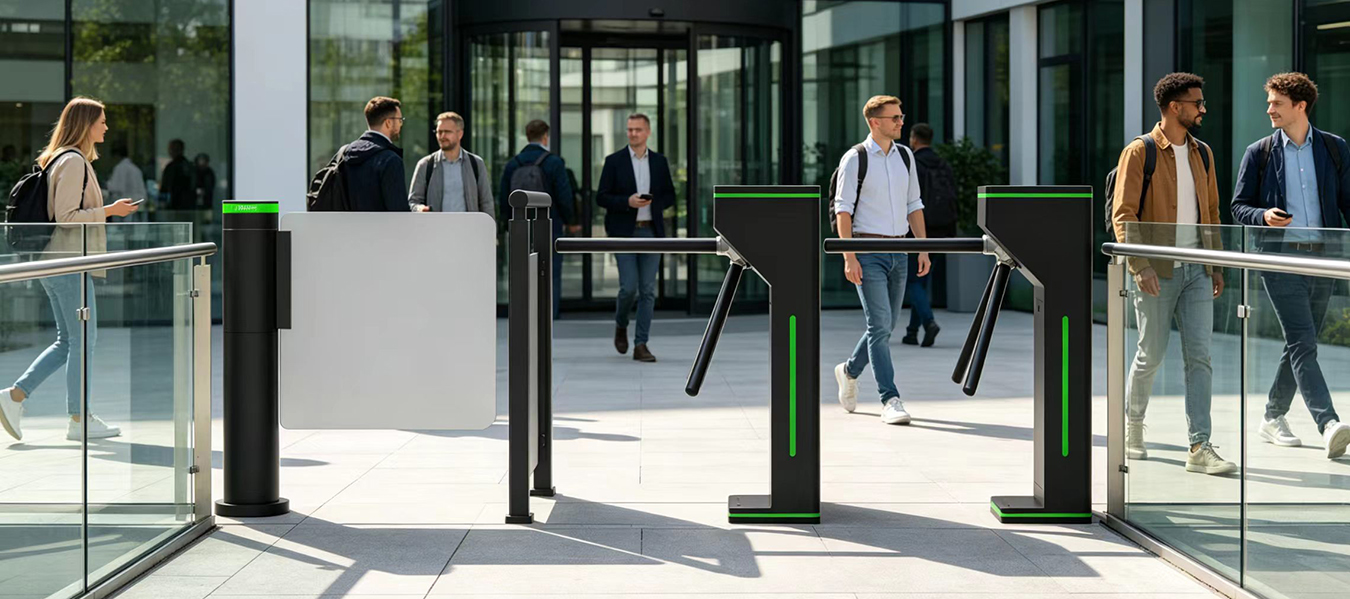
For security integrators and access control distributors, the tripod turnstile remains one of the most trusted, cost-effective pedestrian gates on the market. Simple, robust, and easy to integrate with nearly every access credential system, the 3-arm tripod turnstile is a staple for factories, stadiums, construction sites, office lobbies, and public transit. But not all tripod turnstiles perform the same. Choosing the wrong type for a project can lead to complaints, safety non-compliance, or security gaps.
This tripod turnstile guide breaks down what a tripod turnstile is, its three main configurations, core safety and security mechanisms, honest limitations, housing styles, best-fit applications, and common questions your clients will ask.
What is a tripod turnstile?
A tripod turnstile (also known as a 3-arm turnstile or waist high turnstile) is a waist-height pedestrian access control turnstile gate built around a central rotating hub with three horizontal arms spaced 120° apart.
A tripod security barrier turnstile is one of the most popular and cost-effective pedestrian access control gates used worldwide. Built around a central rotating hub fitted with three sturdy metal arms spaced 120 degrees apart, it creates a physical barrier that only permits one person to pass per valid authorization cycle. Unlike speed gates, swing barriers or full-height turnstiles, tripod turnstiles sit at waist height, balancing security, budget, space efficiency and user convenience.
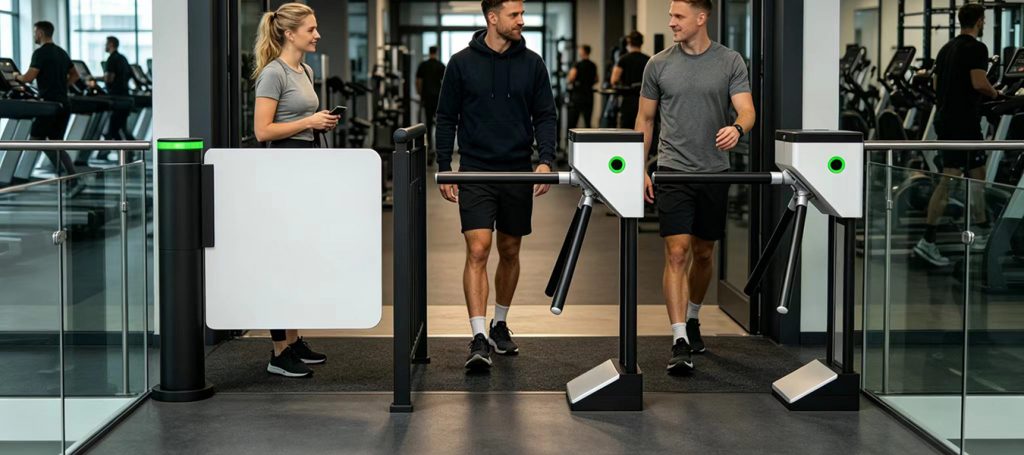
In standard operation:
- A user presents a valid credential (RFID card, QR code, fingerprint, face recognition, or ticket) to the reader.
- The access controller sends an unlock signal to the turnstile mechanism.
- The arms rotate exactly one 120° segment to allow a single person through.
- The mechanism locks again after the cycle completes, waiting for the next valid authorization.
Most tripod turnstiles use 304 stainless steel housings for durability, support dry contact, RS485 or TCP/IP integration, and work for indoor or covered outdoor installations. Its biggest advantage for integrators is balance: solid physical access control without the high price tag of full-height turnstiles or speed gates.
How does a tripod turnstile work?
Tripod turnstiles run on electromechanical logic. The core rule is simple: one valid credential unlocks one 120-degree rotation, then the mechanism locks automatically again to block tailgating.
Here is the step-by-step workflow:
- Standby locked state Under normal conditions, the locking solenoid or motor keeps the central hub fixed. The three arms stay in the blocking position; you cannot push the arms through without a valid access signal.
- User authentication The visitor or staff presents their credential to the connected reader. The reader sends verification data to the access controller.
- Unlock trigger Once approved, the controller sends an electric signal to release the lock. For semi-automatic models, the arm is unlocked but stays stationary; the user needs to push it gently to rotate. Fully automatic motorized tripod turnstiles will drive the arm forward automatically after verification, with no pushing required from users.
- Controlled single passage The hub rotates exactly 120 degrees. This rotation moves one arm out of the way for the user to walk through, while the next arm rotates into the blocking position. This physical limitation is the main reason tripod turnstiles are effective against tailgating and piggybacking.
- Auto-reset and re-lock After completing the rotation, the mechanism immediately locks again. The system will not allow another passage until a new valid credential is scanned. Most models also include sensors to detect improper movement and trigger alarms for forced pushing or climbing attempts.
A critical safety feature: most tripod turnstiles support arm drop on power failure. When power cuts out, the arms fall down automatically to create an unobstructed evacuation path, complying with emergency exit safety rules. Many can also connect to UPS backup power for continuous access management during outages.
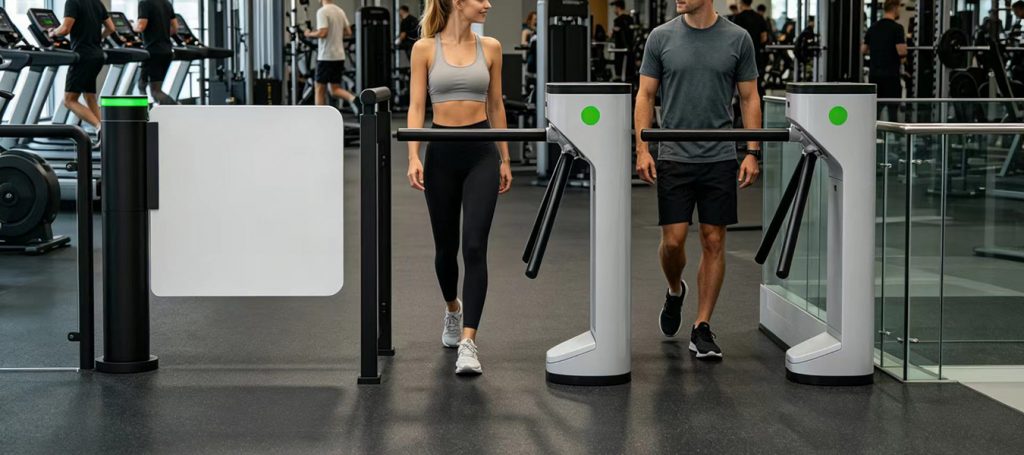
3 main types: manual / semi-automatic / fully automatic
- Semi-automatic tripod turnstile: The most common and budget-friendly option. Solenoid lock release, manual push rotation. Good for offices, factories and construction sites.
- Fully automatic motorized tripod turnstile: Motor-driven rotation, smoother operation, quieter movement. Preferred for premium office lobbies, gyms and high-end residential entrances.
- Manual tripod turnstile: Designed for emergency evacuation. Lowest cost, no power supply needed, minimal maintenance, vandal-resistant. Widely used in public buildings and stadiums.
- Waterproof outdoor tripod turnstile: Upgraded IP protection, sealed electronics and temperature-resistant components for exposed outdoor gateways.
The three categories are defined by how the rotating arms move and lock. This comparison table helps you quickly match the model to your client’s budget, traffic volume and security requirements.
| Type | How it works | Pros | Cons | Ideal projects |
|---|---|---|---|---|
| Manual tripod turnstile | Pure mechanical lock; no solenoid or motor. User pushes the arm to rotate. No electric unlock signal required. | Lowest cost, no power supply needed, minimal maintenance, vandal-resistant | No access control integration, can’t log users, limited directional control, slower throughput | One-way free-flow exit lanes, simple stadium exits, low-traffic public areas, temporary sites |
| Semi-automatic tripod turnstile | Solenoid lock releases after valid credential. User pushes the arm manually to rotate. Spring-assisted reset. | Best price-performance, easy wiring, widely compatible with third-party access boards, proven reliable, easy service | Requires user push force; not ideal for high peak traffic or users with limited mobility | Factories, construction sites, office entrances, school auxiliary gates, most standard access control projects |
| Fully automatic tripod turnstile | Brushless motor drives arm rotation automatically after verification. No pushing required. | Smooth hands-free operation, higher throughput, consistent rotation speed, advanced sensor logic, auto reset | Higher unit cost, motor is an extra wear part, slightly more complex troubleshooting | High-traffic gyms, metro stations, tourist attractions, premium office buildings, ticketed venues |
Most integrators select semi-automatic tripod turnstiles as their default offering because they fit the majority of commercial access control projects and keep total project cost balanced for end clients.
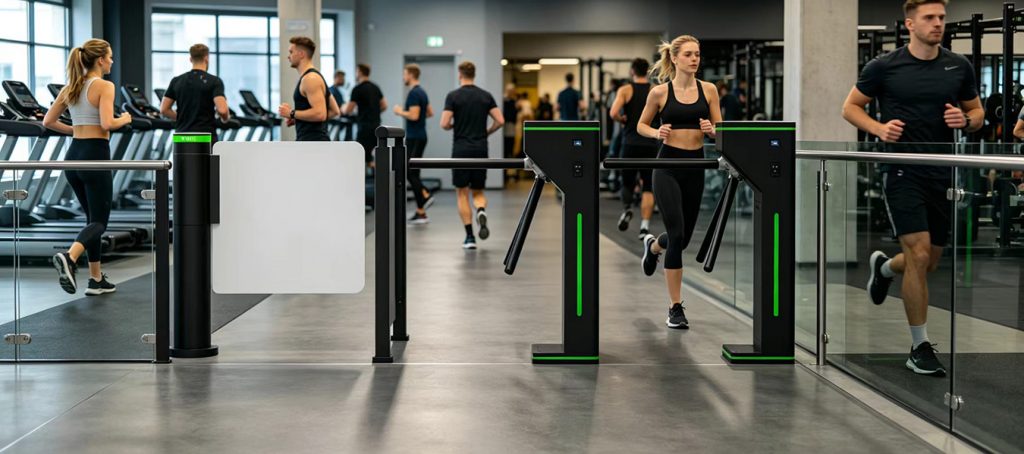
Core mechanism: anti-reverse, anti-pinch, emergency release
These three functions are non-negotiable for most commercial and fire-code-compliant installations.
Anti-reverse Anti-reverse stops the arms from rotating backward. Once a user is authorized to enter, the mechanical clutch or electronic lock blocks reverse rotation. This prevents someone from trying to push the arms open from the exit side to sneak in, or using the gate to go against the approved flow direction. It is different from anti-tailgating, and both should be explained separately to your clients.
Anti-pinch protection Anti-pinch is a safety feature, not purely security. On motorized fully automatic models, sensors detect resistance when the arm meets an obstruction. The motor stops or reverses immediately to avoid pinching children, bags or limbs. Even semi-automatic models with soft-stop dampers reduce the risk of sharp impact when arms reset. This is critical for venues with heavy foot traffic and unsupervised visitors.
Emergency release / fail-safe drop arm This is the most important safety feature for fire compliance. On power failure or emergency fire alarm trigger, the tripod arms drop down automatically, clearing the lane for unobstructed evacuation. Without this feature, the turnstile can become a dangerous barrier during an emergency. Some basic manual models only offer manual key release, which is not acceptable for most public building codes.
Key benefits of tripod turnstiles
Tripod turnstiles remain a top choice for access control for clear reasons. They are affordable compared with speed gates and full-height turnstiles, while delivering tangible anti-tailgate protection that card readers alone cannot provide. They have a compact footprint, fitting into narrow entry lanes where larger gates cannot install.
Mechanically simple designs mean fewer failure points and lower long-term maintenance costs. They support bidirectional access configuration and integrate with existing access control software, attendance systems and ticketing platforms. Typical throughput ranges from 25 to 40 people per minute, ideal for medium pedestrian traffic volumes.
Security limits: what tripod can & cannot do
Honesty about limitations builds trust with your clients and reduces post-install disputes. Tripod turnstiles are excellent for disciplined one-person-per-credential flow, but they are not invulnerable.
✅ What a tripod turnstile does well:
- Physically enforce one passage per valid credential under normal use
- Block reverse entry
- Record access events when paired with an access controller
- Deter casual tailgating through the physical arm barrier
- Withstand heavy daily use in industrial and public settings
❌ What a standard tripod turnstile cannot do well:
- It cannot reliably stop determined tailgating. A small, agile person can squeeze closely behind the authorized user and slip through in the same rotation cycle. The 3-arm structure only creates physical separation, it does not include AI or infrared tailgating detection by default.
- It cannot stop crawling under or climbing over. Since it is waist-high, motivated people can bypass it from above or below.
- It cannot verify identity by itself. The turnstile is only a barrier; the reader (card, face, fingerprint) handles identity validation.
- It is not a high-security perimeter barrier. For maximum anti-bypass protection, pair tripods with full-height turnstiles, fencing, or additional infrared detection sensors.
Be transparent with customers: “Tripods reduce tailgating risk, but if your site requires zero tailgating tolerance, we need to add extra sensors or upgrade to full-height turnstiles.”
Common housing: vertical tripod vs bridge tripod
After choosing the drive type, the next specification decision is housing style: vertical or bridge tripod.
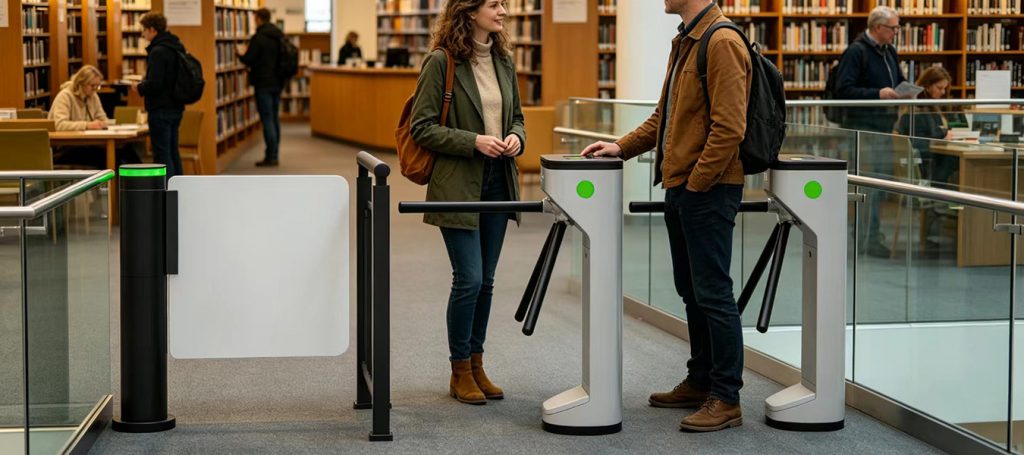
Vertical tripod turnstile Vertical models have slim, narrow upright cabinets. They save floor space, look clean and compact, and are easier to fit into tight entrance vestibules. Readers are usually mounted directly on the vertical cabinet. They are the most popular choice for office lobbies and small lane setups. The downside is less space for built-in sensors, and the narrow chassis is easier to crawl under compared to bridge styles.
Bridge tripod turnstile Bridge-style tripods feature a longer, wider base that spans the full lane width. The extended chassis makes crawling under much harder. The top bridge panel has room to integrate multiple readers, indicator lights, IR sensors, and status displays. It looks more substantial and premium, making it preferred for stadiums, tourist parks and high-traffic sites. The tradeoff is a larger footprint and higher material cost.
Ideal application list
Tripod turnstiles shine in these environments:
- Construction sites and worker time-attendance access
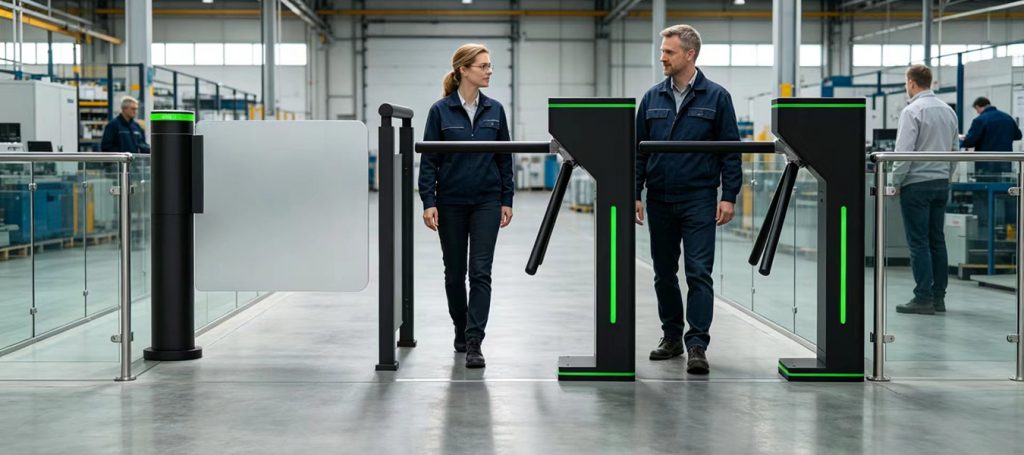
- Manufacturing factories and workshop entrances
- Gyms, sports centers and fitness clubs
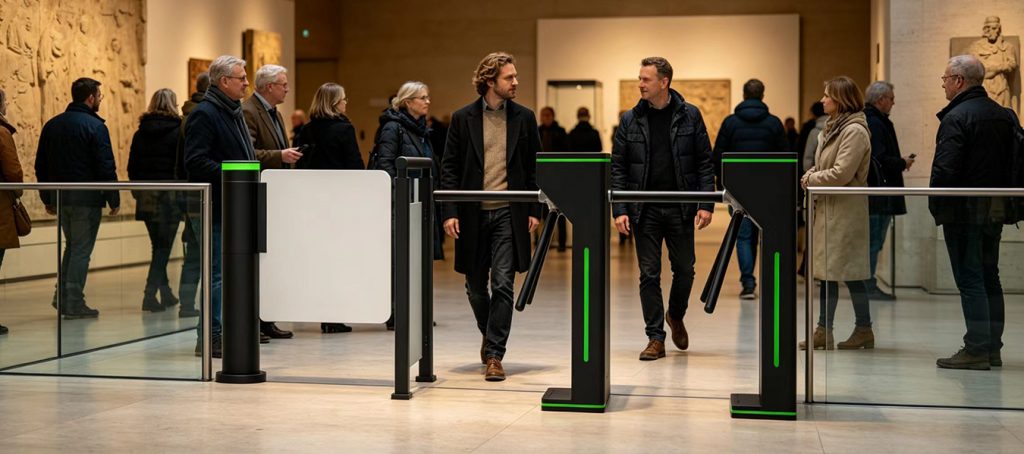
- Stadiums, amusement parks, museums and ticket attractions
- Office buildings and staff-only entrances
- Bus stations, metro auxiliary pedestrian lanes
- Schools and university staff access points
- Mine and industrial compound pedestrian gates
They are less suitable for high-security prisons, restricted data centers, or sites where climbing/crawling bypass is a major concern.
FAQ
Q: Can a tripod turnstile stop tailgating completely?
A: The three-arm structure creates a strong physical barrier and greatly reduces tailgating risk. It works best paired with proper signage and optional infrared detection sensors for high-security zones.
Q: Can I connect a tripod turnstile to my existing access system?
A: Yes. Most tripod turnstiles support dry contact, RS485 or TCP/IP communication, compatible with most mainstream access control and time-attendance systems.
Q: What is the difference between a tripod turnstile and a speed gate?
A: Tripod turnstiles use rotating metal arms, lower cost, stronger anti-tailgate performance. Speed gates use glass flaps, faster passage and a more modern look, usually at a higher price.
Q: Can tripod turnstiles work outdoors?
Yes, but you need an IP-rated, waterproof model with shelter from direct rain and snow. Standard indoor stainless tripods will corrode and suffer solenoid/motor failure if exposed long-term to harsh weather.
Q: What throughput can I quote to my client?
Semi-automatic tripods typically support 25–35 people per minute per lane. Fully automatic versions can reach 35–45 people per minute. For rush-hour peaks, calculate multiple lanes rather than relying on one single tripod.
Q: Can tripod turnstiles integrate with my existing access control system?
Nearly always. Most tripod turnstile controllers accept dry contact relay signals, and premium boards support RS485 and TCP/IP for deeper integration with third-party access software, attendance platforms and ticketing systems.
Q: Are drop arms required by fire code?
In most commercial public buildings, yes. Fail-safe automatic drop-on-power-loss is a standard fire-safety requirement for pedestrian turnstiles. Always check local fire code for your project location before quoting.
Conclusion
Tripod turnstiles are a cost-effective, reliable staple for access control integrators. Choosing between manual, semi-automatic, and fully automatic models lets you align performance with project traffic, budget and safety needs.
While anti-reverse, anti-pinch and emergency drop arms deliver critical protection, remember to set clear expectations: standard tripods deter casual tailgating but cannot stop determined bypass. Vertical and bridge housings further adapt to different site layouts.
Perfect for factories, construction sites, gyms and public venues, tripods work best as part of a layered security plan. For high-security requirements, pair them with extra sensors or full-height turnstiles. With proper specification and transparent communication, this classic 3-arm gate offers stable, low-maintenance pedestrian access control.