
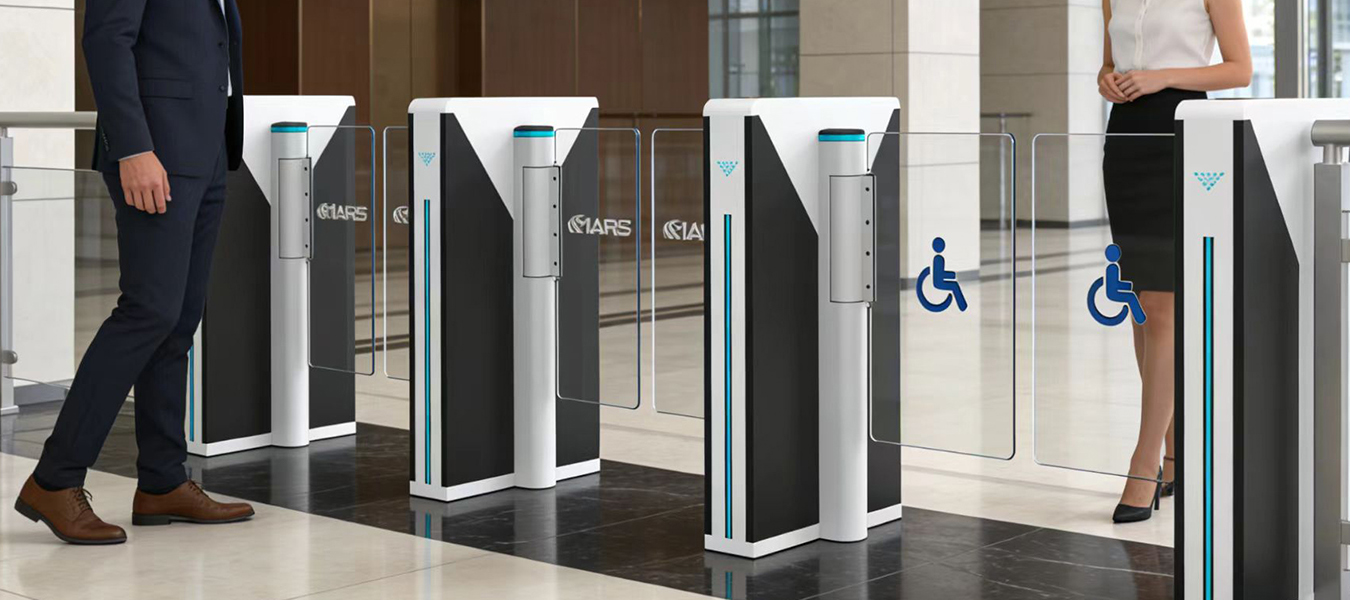
Corporate offices, coworking hubs, multi-tenant towers and R&D facilities all share a common security pain point: uncontrolled pedestrian entry at the lobby. Even with reception staff and keycards, tailgating, unescorted visitors, lost assets and inaccurate occupancy logs remain widespread vulnerabilities. Office turnstiles deliver a structured, scalable access control solution that balances security, user experience, brand aesthetics and local building code requirements.
This buyer-focused guide is written for facility managers, security integrators, commercial builders, property owners and office procurement teams who are actively evaluating turnstile systems for new builds or lobby retrofits. We break down turnstile categories, critical selection criteria, total cost of ownership, integration rules, accessibility rules, failure modes, and real-world deployment considerations that most product datasheets skip.
What Exactly Are Office Turnstiles?
Office turnstiles (also known as office building turnstiles, lobby speed gates or corporate access turnstiles) are automatic pedestrian access barriers designed for modern office lobbies, commercial towers, co-working spaces and corporate headquarters. They balance clean aesthetics, smooth staff flow, reliable security and seamless integration with existing access control systems — making them one of the most popular first-line security upgrades for office property managers, facility teams and business owners.
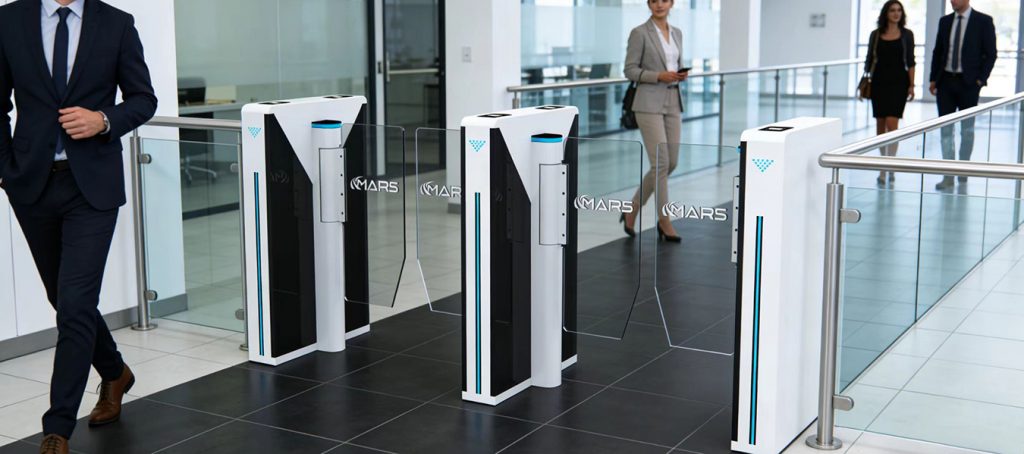
When buyers search for office turnstiles, they are rarely only looking for a gate. Most users are trying to solve a specific lobby pain point: unknown visitors walking straight into office floors, staff tailgating during morning rush, messy manual sign-in, lost visitor badges, no real-time entry logs, or an outdated lobby look that hurts the brand impression. They want a turnstile that fits the lobby design, works quietly during working hours, supports face, card, QR or mobile credentials, and does not create long queues at peak arrival time.
Compared to full-height security turnstiles used in prisons, data centers, or high-risk industrial sites, office turnstiles are usually compact, quiet, visually refined, and built to fit premium lobby decor. They are not intended to stop forced, aggressive breach attempts; their primary job is to prevent accidental tailgating, block unauthorized entry, log user activity, and create a clear controlled entry point at reception.
What are office turnstiles used for?
The core purpose of an office building turnstile is to validate every person entering the secure zone and record entry events. For typical office buildings, use cases include:
- Employee daily access and automatic time & attendance tracking
- Visitor pre-registration, temporary QR or card pass issuance
- Anti-tailgating and piggyback detection to block unauthorized follow-up entry
- Real-time people counting for lobby occupancy monitoring
- Emergency unlock on fire alarm trigger for safe evacuation
- Restricting access to sensitive internal floors, server rooms or finance zones
- Creating a controlled, professional reception experience without constant security guard checking
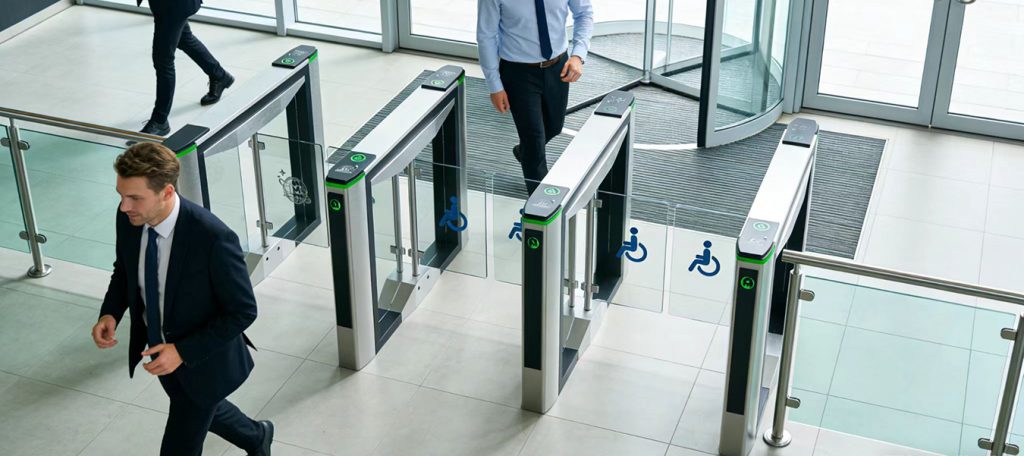
Unlike rugged industrial turnstiles for factories, office turnstiles prioritize quiet operation, slim frames, brushed stainless steel or tempered glass panels, soft lighting and a premium look. Most office lobbies choose waist-high speed gates or swing barrier turnstiles instead of heavy-duty full-height turnstiles, unless the building requires higher security for unmanned restricted entrances.
Common types of office building turnstiles and which one to pick
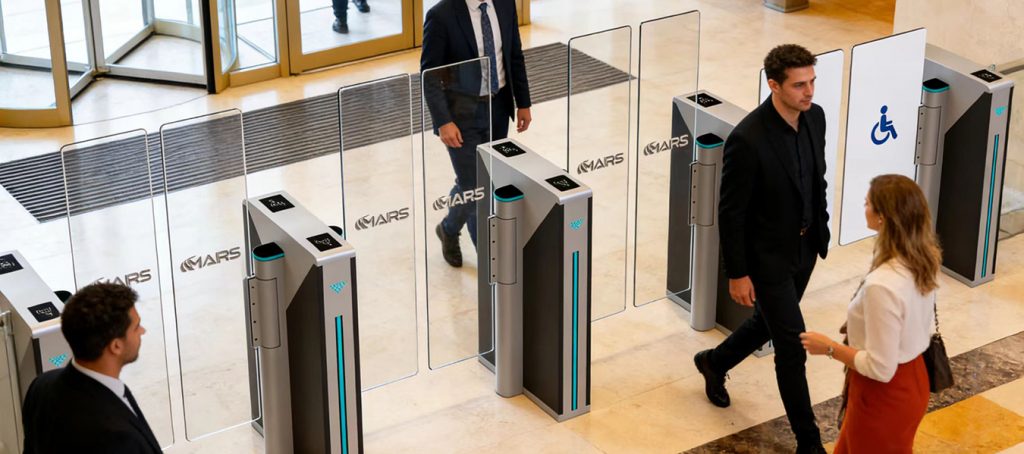
- Optical speed gates (Most Popular Premium Office Choice): Sensor-only optical turnstiles with no physical barrier, or paired with low glass baffles. Minimalist luxury style, common in high-end corporate lobbies. Good for visual guidance and people counting, but lower anti-tailgating strength than physical barrier models. Optical speed gates combine infrared detection sensors with retractable acrylic or glass barriers. They are the top pick for headquarters, tech firms, law and finance offices.
✅ Pros: Sleek, quiet, excellent tailgating detection, customizable finishes, LED status lighting, high throughput
⚠️ Cons: Higher upfront cost, sensors need regular cleaning, primarily designed for indoor use
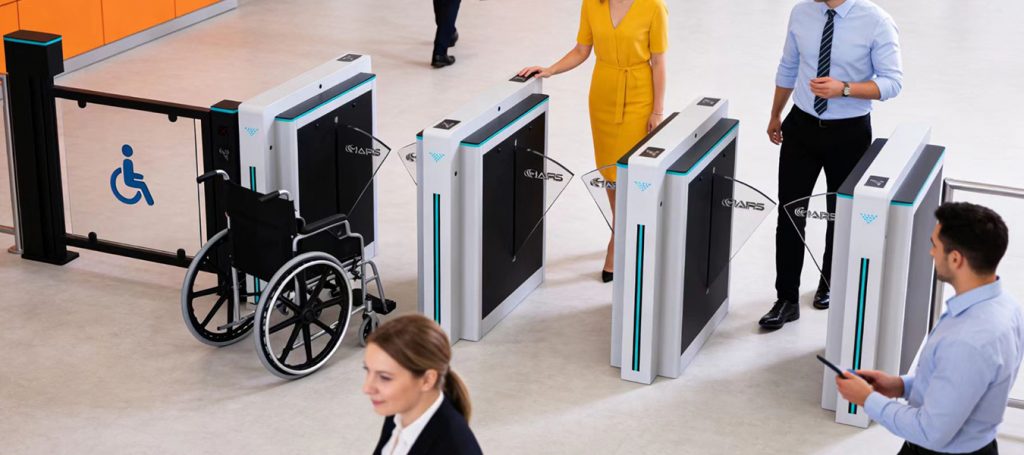
Best for: High-end reception lobbies, high daily foot traffic, brand-sensitive corporate spaces - Swing barrier building turnstiles: The most flexible office option. Wide adjustable lane width supports wheelchair access, luggage, delivery carts and strollers. Swing panels move smoothly and quietly. Best for mixed traffic, multi-tenant office buildings and projects needing accessibility compliance. Wide swing gates are not a primary staff lane but a mandatory companion to narrow turnstile banks. They provide clear passage for wheelchair users, mobility scooters, delivery carts, strollers and oversized equipment.
✅ Pros: Fully adjustable wide passage, easy emergency release
⚠️ Cons: Higher cost per lane, takes up more lobby floor space
Best for: All office turnstiles installations to meet accessibility requirements - Flap barrier speed gates: Fast retractable acrylic wings, compact footprint, high throughput. Ideal for high-density offices with 200+ staff and short morning rush windows. They are space-saving and widely used in downtown Grade A office towers. Compact retractable wing barriers, typically stainless steel or plastic flaps. Widely used in office towers, elevator lobbies and shared office buildings.
✅ Pros: Lower cost than speed gates, small footprint, fast cycle time
⚠️ Cons: Less elegant than glass speed gates, flaps can be damaged by heavy impact
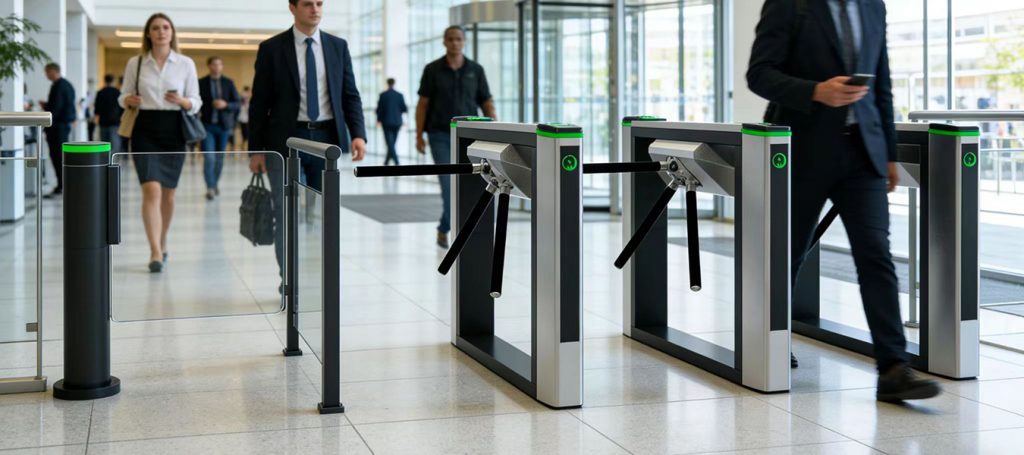
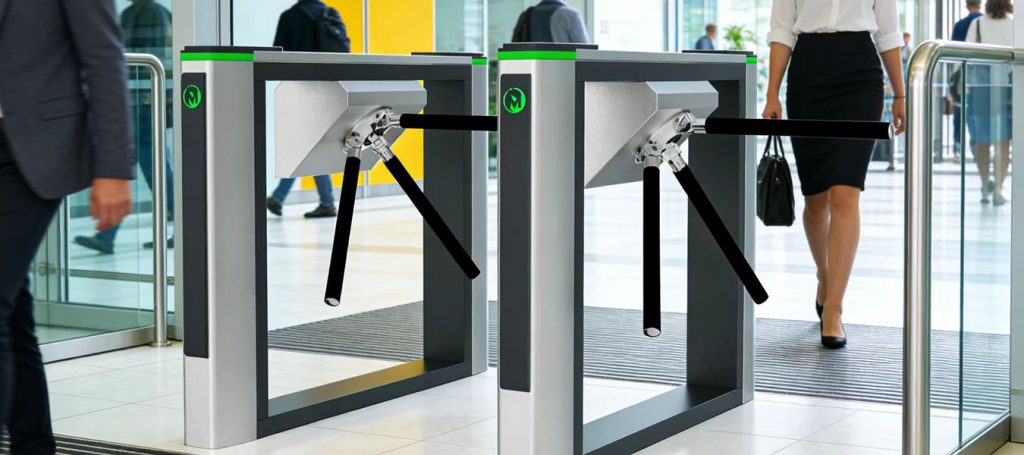
Best for: Standard commercial office towers, secondary staff entrances - Tripod turnstiles: Low cost, strong mechanical anti-tailgating. Less popular for main office lobbies due to rigid look and slower pass speed, sometimes used for back service entrances, gym areas or staff secondary gates. Mechanical or semi-automatic rotating three-arm turnstiles. The budget staple for access control.
✅ Pros: Low hardware cost, robust, simple mechanics, easy to repair
⚠️ Cons: Audible mechanical noise, less aesthetic for front lobbies, easier to bypass by climbing
Best for: Coworking back entrances, service corridors, low-budget office sites, contractor entry points - Full height office building turnstiles: Full enclosed rotating barrier, highest security. Rare for main reception lobbies; selected for standalone unmanned office annexes, data centre entry and restricted compound gates.
✅ Pros: Powerful anti tailgating, anti climbing design, high durability and low risk of damage, simple integration, all-weather available options. Compared to optical doors with heavy sensors, the continuous maintenance cost is low.
⚠️ Cons: Poor aesthetics, low throughput, poor user experience, large footprint, and high installation costs.
Best for: Research and development offices, on-site data center offices, laboratory buildings with high security regulations, government office annex buildings, and secure tenant areas, aesthetics are secondary factors for safety and require low budget high security office access points with anti climbing capabilities.
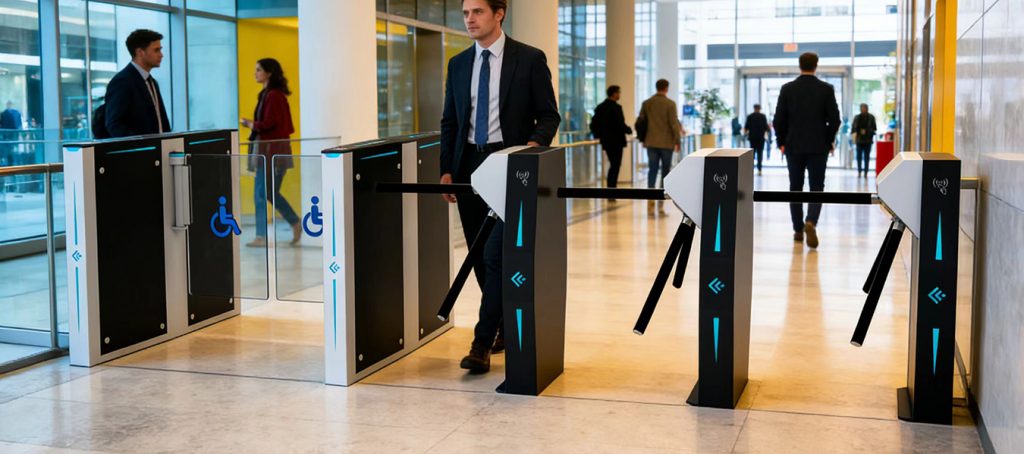
Why Invest in Office Turnstiles Access Control?
- Mitigate tailgating and piggybacking risks Tailgating is the #1 human-factor security flaw in office buildings. Staff often hold doors open for strangers, or unauthorized people follow closely behind valid badge holders. Optical speed gates detect this behaviour and trigger local alarms or push alerts to your security dashboard.
- Automate audit trails and emergency roll call Every entry and exit is timestamped and linked to a user ID. During fire drills, evacuation events or incident investigations, you can pull real-time occupancy reports quickly. This is valuable for compliance, insurance and internal security audits.
- Reduce reception labour burden Instead of reception continuously monitoring and vetting every incoming person, the turnstile handles credential validation. Front-desk teams focus on visitor sign-in, escorting, meeting support and customer service.
- Flexible access rules for hybrid work Modern office turnstile systems work with time-scheduled permissions. Full-time staff, part-time workers, contractors and temporary visitors can each have separate access windows. Temporary QR credentials expire automatically, which is ideal for hot-desking and hybrid office models.
- Fail-safe evacuation design for fire code compliance Code-approved office turnstiles unlock automatically when power is lost or a fire alarm signal is received. Barriers release outwards to allow unobstructed evacuation, which is non-negotiable for commercial building inspections.
- Strengthen brand impression A tidy, modern speed gate bank communicates professionalism to clients, candidates and investors. Many premium office fit-outs select custom finishes, branded etching and soft RGB lighting to match lobby interior design schemes.
Critical Buying Criteria for Office Turnstiles (Buyer’s Checklist)
Peak Traffic & Lane Sizing
Do not size your turnstile bank only by total headcount. Calculate morning peak arrival rate.
- <100 daily users: 1 standard lane + 1 wide accessible lane
- 100–300 daily users: 2–3 standard lanes + 1 wide accessible lane
- 300+ staff + regular visitors: 3+ standard lanes + dedicated wide lane Leave queuing space before the gates. Bottlenecks during rush hours lead to user frustration and increased attempts to bypass the system.
Accessibility & Local Building Codes
This is one of the most common costly mistakes buyers make. Narrow optical, flap and tripod lanes are not wheelchair-accessible. You must source a swing gate with the required clear width defined by your local accessibility standard (ADA, EU EN, etc.). Confirm emergency release hardware, sensor layout and opening direction with your architect or AHJ before ordering.
System Integration Compatibility
Most office turnstiles support standard open protocols: Wiegand, OSDP, dry contact relay, RS485 and TCP/IP. ⚠️ Red flag: Proprietary turnstile hardware that only works with the manufacturer’s own access software. This locks you into a single vendor for future upgrades and maintenance. Check compatibility with your existing access controller, visitor management system (VMS), time & attendance software and cloud access platforms before purchase.
Indoor vs Outdoor Deployment
Nearly all optical speed gates and flap barriers are indoor-only. If your entry is semi-exposed or outdoor, you need IP-rated units, 316 marine-grade stainless steel, anti-freeze heating modules for cold climates, sealed electronics and rain hoods. Standard indoor turnstiles will suffer sensor failure, condensation and motor damage quickly if exposed to weather.
Aesthetics, Noise and Finish Options
For front-of-house lobbies, noise is a major consideration. Optical speed gates operate almost silently; mechanical tripods produce clear rotating noise. Available custom options: brushed stainless steel, black powder coat, white frames, tinted glass, custom logo engraving, RGB status lights, slim cabinet profiles.
Infrastructure: Power, Cabling and Floor Conditions
Turnstiles require stable 110V/220V power and local LAN for TCP/IP connection. If your lobby is already finished, surface wiring or floor channeling will add project cost. A site survey before purchase is strongly recommended to check floor anchoring, column positions, door swing clearance and cable routes.
Total Cost of Ownership (Not Just Hardware Price)
Many buyers compare only the unit price and underestimate extra expenses. Full budget items include:
- Turnstile hardware (lanes, barriers, readers)
- Reader modules (RFID, QR, facial recognition)
- Electrical and network wiring
- Certified installation labour
- Programming and system integration
- Shipping, customs and on-site survey
- Extended warranty, spare parts and annual maintenance Low-cost generic turnstiles often have poor component availability and limited after-sales support, driving higher long-term repair costs.
Maintenance and Vendor Support
Optical speed gates require periodic sensor cleaning, servo motor inspection and cable connection checks. Tripod turnstiles need lubrication and bolt tightening. Prioritize suppliers who can provide local service, spare parts inventory and remote troubleshooting support. Avoid vendors who only sell hardware with no ongoing technical support.
Common Office Turnstiles Deployment Use Cases
- Corporate headquarters and Grade A office tower lobbies
- Shared coworking spaces and flexible office campuses
- Multi-tenant commercial building shared entrances
- Internal restricted zones: R&D labs, finance departments, server room vestibules
- Professional services offices: law firms, accounting agencies, consulting firms
- Elevator lobby access control to restrict floor access
- Service entrances for contractors, cleaners and delivery personnel
FAQ
Q1: Which turnstile type is best for my office lobby?
A1: For premium front reception lobbies, optical speed gates are the best all-round option for aesthetics, tailgating detection and user experience. For budget projects, coworking back entrances and secondary staff gates, flap barriers or tripod turnstiles work well. Every installation should include a dedicated wide ADA swing gate.
Q2: Can office turnstiles connect with our existing access control or attendance system?
A2: Most modern office building turnstiles support standard dry contact, Wiegand, RS485 and TCP/IP interfaces. Tell your supplier your controller brand and protocol before ordering to confirm integration. Visitor management platforms and facial terminals can also be combined.
Q3: How much do office turnstiles cost?
A3: Pricing varies widely by type, material, reader modules and quantity. A basic flap speed gate lane is lower cost; swing barriers with wide accessible lanes, facial recognition and custom finishes cost more. Installation, cabling, software license and after-sales service are usually separate from the hardware price. Send your lobby layout and function list for an accurate quotation.
Q4: Are office turnstiles suitable for wheelchair users?
A4: Standard narrow flap lanes are not wheelchair-friendly. You need at least one swing barrier lane with 900mm+ clear width for wheelchairs, carts and strollers to meet accessibility requirements.
Q5: Do office turnstiles stop tailgating effectively?
A5: Physical barrier speed gates with multi-layer infrared or 3D sensors provide reliable anti-tailgating. Pure optical turnstiles without physical barriers can detect tailgating and trigger alarms but cannot physically block the second person. Choose barrier models if anti-tailgating is a hard requirement.
Q6: What happens during a fire emergency?
A6: Qualified office turnstiles have fire alarm linkage. Once receiving the fire signal, all barriers automatically open to free passage, no electric lock stays engaged. This is a mandatory safety feature for commercial office projects.
Q7: How many turnstile lanes do I need for my office?
A7: Start with total staff count and peak arrival window. If most people arrive in 20 minutes, add extra lanes. For example, 300 employees with concentrated rush usually need 3 normal lanes + 1 wide accessible lane. Your supplier can do a traffic simulation after you share staff schedule.
Q8: Can I customize the appearance of office building turnstiles to match my lobby?
A8: Yes. Custom options include stainless steel finish, powder coating colours, acrylic panel tint, LED strip colour, engraved logo, housing size and mounting style. Many suppliers support OEM and ODM for commercial office projects.
Q9: How long does installation take?
A9: A standard 2–4 lane office turnstiles set normally takes 1–3 working days on site, depending on wiring condition and whether access control software commissioning is included. Pre-site survey helps avoid delays.
Q10: Can office turnstiles be used outdoors?
A10: Standard indoor office turnstiles are not waterproof. For covered outdoor lobbies or exposed entrances, select high IP rated outdoor models with heater and anti-condensation modules.
Q11: What warranty and after-sales support should I expect?
A11: Most reliable factory suppliers offer 1–3 years hardware warranty. Confirm whether the warranty covers motors, sensors and control boards, and clarify remote troubleshooting, spare parts lead time and on-site service scope.
Q12: Can office turnstiles manage temporary visitors?
A12: Yes. They work with visitor systems: reception staff register visitors, send temporary QR codes or print one-time cards, and the turnstile only grants access within the valid time window. All visitor records are stored for audit.
Q13: What is the typical lifespan of office turnstiles?
A: With regular maintenance and proper indoor deployment, quality office turnstiles can last 8–12 years. Harsh environments, heavy impact or lack of maintenance will shorten service life significantly.
Final tips for buying office turnstiles
Office turnstiles are not just security hardware; they are part of your office lobby experience. Prioritize quiet operation, safety compliance and open integration first, then aesthetics. Always ask your supplier for site survey, layout drawing, test video and reference office projects before confirming the order. If you have a drawing of your lobby entrance, send it over to get a tailored lane layout and quotation for your office building turnstile solution.
Prioritize vendors that offer factory direct pricing, clear warranty terms and global shipping support if you are sourcing for cross-border commercial projects. A well-designed office turnstile system protects your premises, streamlines lobby flow and creates a secure, welcoming entry point for your workplace.