
If you are searching for a reliable pedestrian access control solution for your building, campus, community or public facility, swing turnstiles (also known as swing barrier gates) are one of the most flexible and popular channel management options available on the global market. This guide explains everything buyers need to know before purchasing a swing gate turnstile.
1. What Is a Swing Turnstile? Who Is It Suitable For?
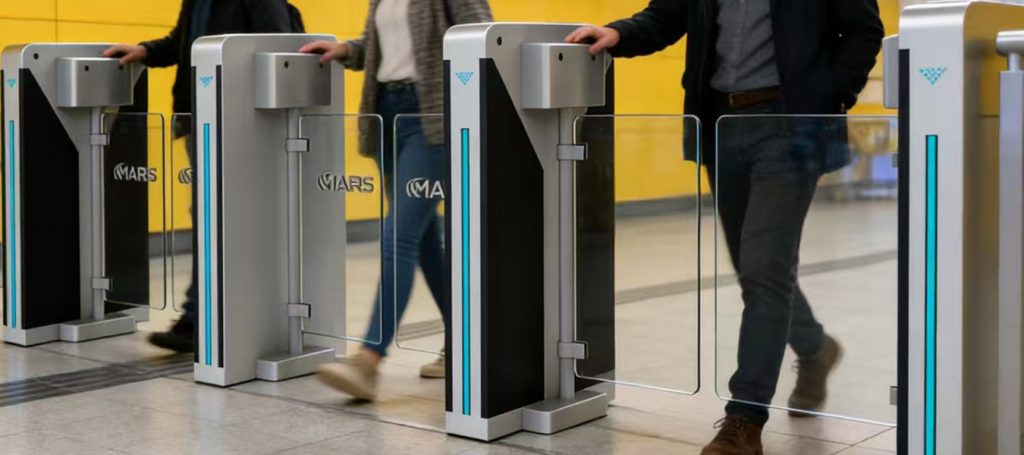
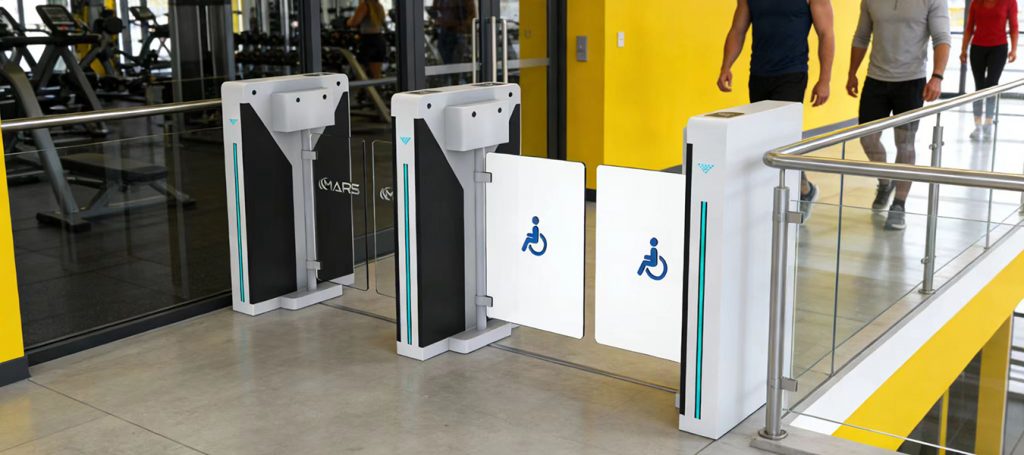
Swing turnstile is an access control management device that controls pedestrian access through motor-driven horizontal rotation of the swing arm. Its core component is the swing arm, which is driven by a motor to swing horizontally. It consists of stainless‑steel chasis, swing panels, brushless motor drive systems, infrared safety sensors and an access‑control mainboard.
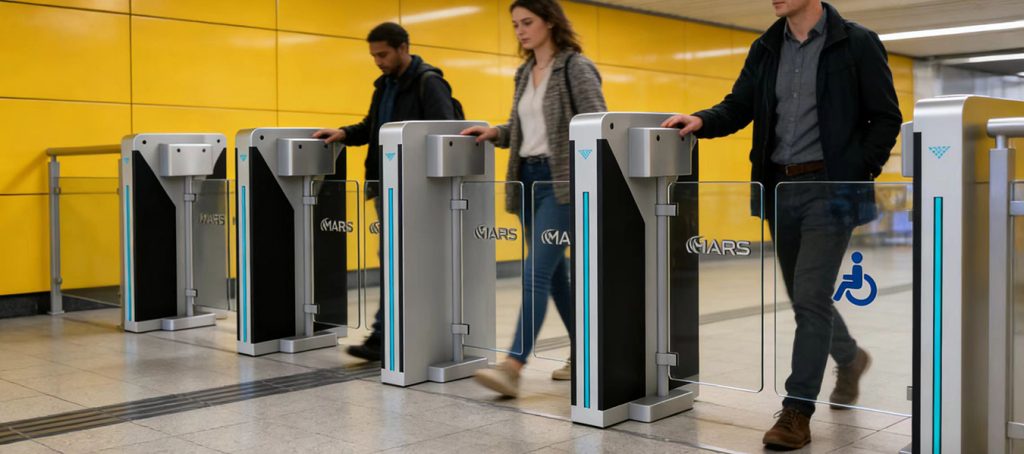
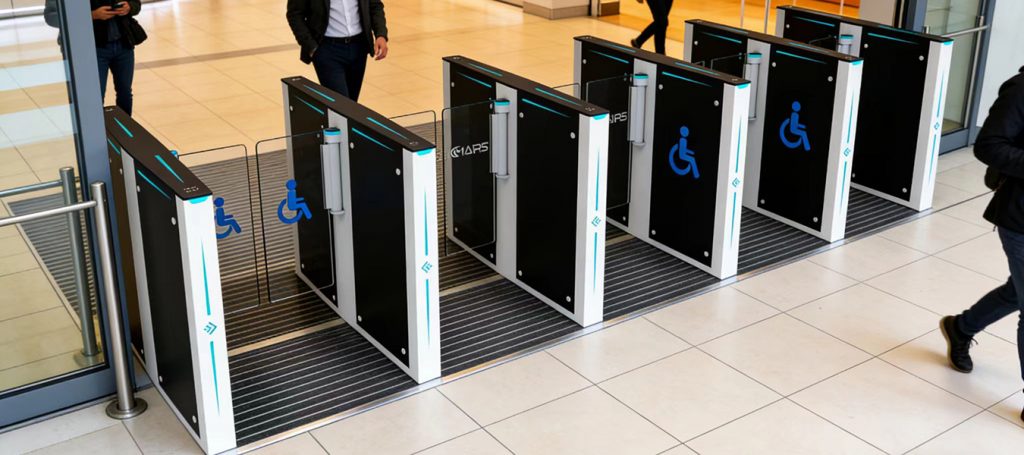
The biggest advantage of an optical swing gate turnstile is its ultra-wide passage. The standard passage width ranges from 600mm to 900mm, and customized models can reach up to 1500mm. This unique feature permits wheelchairs, strollers, luggage, bicycles and service carts to pass smoothly, making swing turnstiles highly accessibility‑friendly access equipment.
It perfectly accommodates various complex passing demands that traditional turnstiles cannot meet:
- Pedestrians with large luggage and packages
- Strollers, wheelchairs, and medical beds
- Commuters with bicycles and electric scooters
- Delivery staff with trolley carts
Among all channel turnstiles, the swing door turnstile has the highest traffic compatibility. It is the preferred choice for scenarios requiring non-motor vehicle and large-item passage.
2. Swing Turnstile vs Tripod Turnstile vs Flap Barrier: Full Comparison
Many purchasers are confused about choosing between swing barrier turnstile, tripod turnstile, and flap barrier. There is no absolute best type—only the most suitable one for your scenario. The detailed comparison below helps you make a quick selection.
| Comparison Dimension | Swing Turnstile | Tripod Turnstile | Flap Barrier |
|---|---|---|---|
| Passage Width | 600-1500mm (wheelchair & luggage accessible) | 510-550mm (single person only) | 550-900mm |
| Passing Speed | 25-45 people per minute | 20-30 people per minute | 35-60 people per minute |
| Anti-tailgating Ability | Strong (infrared matrix detection) | Excellent (mechanical limit) | Very Strong |
| Appearance Grade | High, flexible modeling design | Ordinary | Premium |
| Applicable Scenarios | Office buildings, malls, hospitals, scenic spots | Factories, construction sites, low-budget projects | Airports, high-end office buildings |
| Price Range | $400-$2000 per unit | $250-$700 per unit | $1600-$3300 per unit |
Professional Selection Suggestions
- Choose swing gate turnstile first if your site has barrier-free access, large luggage, or trolley passing demands
- Choose tripod turnstile for budget-limited industrial parks and construction sites with single pedestrian flow
- Choose flap barrier for high-end venues pursuing extreme passing speed and minimalist appearance
3. 6 Core Parameters to Check When Buying a Swing Turnstile
The following 6 key parameters directly determine the service life, stability, and operational effect of the swing barrier turnstile. Never ignore these indicators during procurement.
3.1 Mechanism Lifespan & Motor Type
The turnstile mechanism is the core component of a swing gate turnstile. The industry standard requires a fault-free operation of no less than 5 million times, while high-quality brands can reach more than 8 million times. Brushless DC motors are the mainstream configuration in 2026, with 42% lower failure rate and 35% lower power consumption than traditional AC motors. Always ask manufacturers for actual test data instead of verbal promises.
3.2 Body Material & Thickness
The main body of a standard swing barrier turnstile adopts 304 stainless steel with a thickness of ≥1.5mm. Inferior products use 201 stainless steel or thin plates, which will rust and deform within half a year. For coastal and humid environments, upgrade to 316 stainless steel for superior salt spray corrosion resistance.
3.3 IP Protection Grade & Environmental Adaptability
IP54 is the minimum protection standard for outdoor swing turnstiles, supporting dustproof and splashproof performance. For fully exposed outdoor installation, an IP65 rating is highly recommended to resist dust and low-pressure water flushing. In northern cold regions, confirm the low-temperature startup capacity to ensure normal operation below -20°C.
3.4 Infrared Detection & Anti-tailgating Performance
Infrared beams are critical for passage detection and anti-tailgating. High-end swing turnstiles are equipped with more than 12 pairs of infrared arrays and 3D radar detection, achieving an anti-tailgating accuracy of 99.2%. Verify the number of infrared beams and intelligent logic interlock algorithms before purchase.
3.5 Passing Speed & Traffic Capacity
The conventional passing speed of a swing barrier turnstile is 25-45 people per minute. To avoid peak congestion, calculate the required quantity via peak minute traffic ÷ single-device passing speed, and reserve a 20% margin for sudden traffic surges.
3.6 System Compatibility & Interface Expansion
A qualified swing gate turnstile needs to connect with access control, attendance, ticketing, and reservation systems. Confirm three key points: open API interface support, standardized protocol, and successful docking test with your existing system. Standard RS485 and TCP/IP communication interfaces are basic requirements.
Modern swing turnstiles can connect seamlessly with most mainstream recognition systems:
RFID card readers, QR‑code scanners, facial recognition cameras, fingerprint devices, NFC mobile access, visitor management software and construction‑site real‑name registration systems. Confirm SDK or relay‑interface compatibility with your existing security system before purchase.
3.7. Power Supply
Global‑supply voltage options include AC 220V or 110V with DC24V internal drive power.
4. Essential Safety Functions
Safety features are top priorities for international purchasers:
Anti‑trailing Detection: Multi‑infrared sensors detect and block unauthorised people trying to follow closely behind valid passers‑by
Anti‑pinch Protection: Swing arms automatically rebound when encountering obstacles to prevent injuries
Fire‑safety Release: Arms unlock and swing fully open once power fails, guaranteeing fast emergency evacuation
Anti‑collision Protection: Motor buffer mode reduces damage caused by violent external impact
Alarm Notification: Audible alerts trigger for illegal entry, long‑time stay and forced‑open events
5. Key Purchasing Considerations
1. Installation environment: Indoor or outdoor. Outdoor projects require waterproof cabinets and sun‑shade facilities. Add heating modules if you are located in freezing zones.
2. Daily pedestrian flow: High‑traffic locations need heavy‑duty brushless servo motors.
3. Accessibility demand: Confirm whether wide lanes for wheelchairs are needed.
4. Customisation requirements: Cabinet colour, laser‑engraved brand logo, non‑standard cabinet dimensions.
5. Supplier conditions: Factory‑direct price, production lead‑time, worldwide delivery and warranty terms.
6. After‑sales service: Spare‑part supply and remote technical support.
6. 5 Common Swing Turnstile Buying Pitfalls to Avoid
Most swing gate turnstile failures are caused by improper selection rather than product quality problems. Summarized below are the most easily overlooked pitfalls for buyers.
Pitfall 1: Only Focus on Low Price
Low-cost swing turnstiles are equipped with inferior movements and motors, prone to stuttering and crashing within 6 months. A swing barrier turnstile is a long-term device with a 5-10 year service life. Investing in high-quality products effectively reduces overall operation and maintenance costs.
Pitfall 2: Ignore After-sales Service System
Small manufacturers often have long maintenance cycles due to unstable supply chains. Prioritize formal manufacturers with independent factories and complete after-sales systems, which can provide timely parts supply and 24-hour fault response services.
Pitfall 3: Neglect Outdoor Environmental Adaptability
Different environments have customized requirements: coastal areas need 316 stainless steel + IP65 protection; northern frigid areas require low-temperature startup design; rainy southern areas need enhanced waterproof performance. Universal standard models cannot adapt to extreme working conditions.
Pitfall 4: Reserve No Expansion Interfaces
Face recognition access has become a mainstream trend in 2026. It is necessary to reserve face recognition module installation positions and interfaces during initial purchase. Without reserved expansion space, system upgrading will lead to overall equipment replacement and double cost waste.
Pitfall 5: Place Orders Without On-site Testing
Always conduct a field trial operation before bulk purchase. Test peak passing capacity, identification accuracy, and system docking stability to avoid inconsistent actual effect and parameter labels.
7. Typical Application Scenarios & Configuration Suggestions
The flexible and versatile swing turnstile covers most public and commercial access control scenarios. Below are targeted configuration solutions.
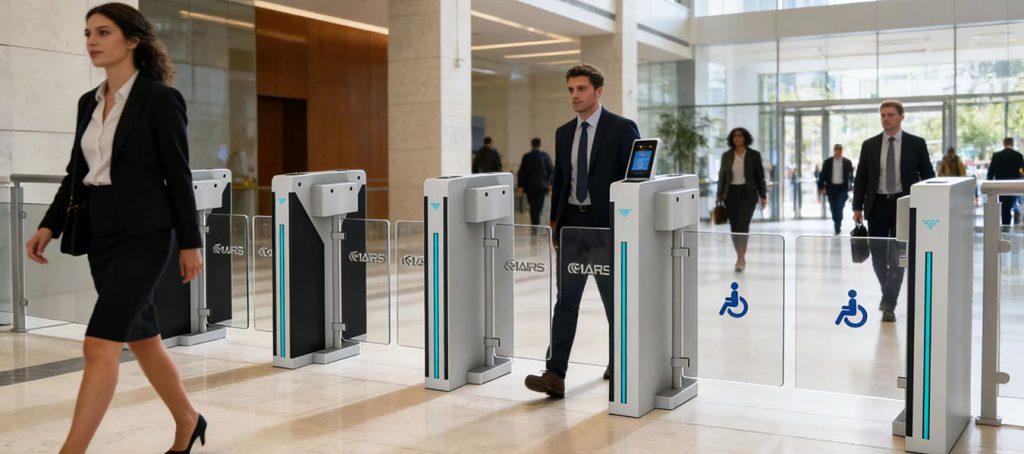
- Office & Enterprise Lobby: Bridge-type swing barrier turnstile with face recognition or card swiping verification, 900-1200mm passage width, balancing safety and high-end image.
- Shopping Malls & Supermarkets: Cylindrical or bridge-type swing turnstiles with infrared automatic opening, convenient for customers with shopping carts.
- Hospitals: Ultra-wide swing turnstiles (over 1200mm) to accommodate wheelchairs and medical beds, compatible with appointment registration verification systems.
- Scenic Spots & Venues: Wide-channel swing turnstiles for barrier-free passages, with reserved face recognition interfaces to upgrade intelligent ticket checking.
- Campuses: 3-4 swing gate turnstile channels at main entrances, including 1-2 bidirectional channels for free access of teachers and students.
- Transport Hubs: Over 900mm wide swing turnstiles, improving passing efficiency by 40% for passengers with large luggage.
8. Swing Turnstile FAQs
Q1: Why does the swing turnstile fail to close automatically after swiping?
90% of such faults are caused by external signal interference or blocked infrared lenses. Solution: Disconnect external signal lines and restart the device; wipe dust on infrared lenses with a clean cloth if the fault persists.
Q2: Can pedestrians pass after the swing turnstile is powered off?
Qualified swing turnstiles support automatic opening after power failure, complying with fire safety standards. The swing arms open fully for free passage and reset automatically after power restoration.
Q3: Can swing turnstiles be installed outdoors?
A: Yes. You should choose models with IP54 or higher waterproof grade. Heater accessories are suggested for cold winter areas.
Q4: Is a wide‑lane swing turnstile available for wheelchair access?
A: Sure. Custom lanes up to 1500 mm are supported.
Q5: Can the swing barrier connect to my existing facial recognition system?
A: Most swing turnstiles adopt standard access‑control interfaces. Please verify compatibility with your supplier.
Q6: Is the anti-pinch function of swing turnstiles reliable?
Formal swing turnstiles adopt a triple anti-pinch design: infrared detection, passing logic protection, and obstacle return. The reset clamping force is controlled within 2kg, ensuring safe passage for pedestrians of all ages.
Conclusion
Selecting a suitable swing barrier turnstile is a balance of passage demand, safety level, budget, and long-term operation and maintenance. Before purchasing, clarify your daily passenger flow, peak traffic pressure, barrier-free passage demands, installation environment, and system docking requirements.
With this professional swing door turnstile buying guide, you can avoid most procurement traps and select a durable, high-efficiency, and cost-effective swing gate turnstile for your project.