
When you need reliable pedestrian access control without permanent ground installation, a portable turnstile is one of the most flexible security solutions on the market. Unlike fixed turnstile gates bolted to floors, portable turnstiles are built for fast‑setup, relocation, and temporary deployments across events, construction sites, pop‑up venues, and remote work zones. Also known as mobile turnstiles, these units deliver the same access verification and crowd‑management performance as stationary models, with zero civil‑work requirements.
What Is a Portable Turnstile?
A portable turnstile is a temporary access control barrier designed to manage pedestrian flow and verify entry permissions without permanent ground installation. It has become a popular access solution for short-term events and temporary sites, as organizations seek flexible, reusable security gates instead of heavy fixed turnstiles.
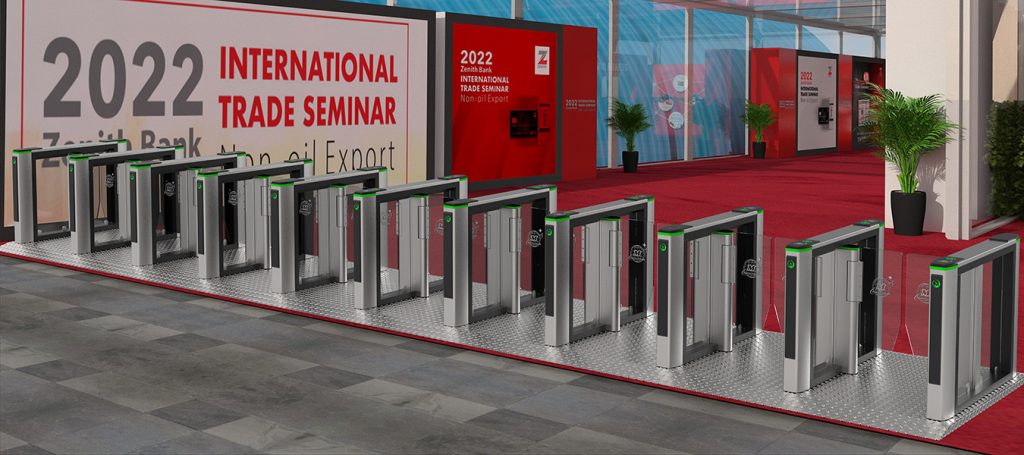
Many buyers confuse portable turnstile and mobile turnstile. In the global access control industry, these two terms are often used interchangeably, yet there is a subtle distinction:
- Portable turnstile: Emphasizes lightweight structure, easy lifting or relocation, built-in mobile base and casters for quick movement. It focuses on portability.
- Mobile turnstile: A broader category. It refers to any turnstile unit that can be moved, including heavy-duty models with reinforced wheeled bases. It focuses on mobility.
The biggest difference from standard turnstiles: no drilling, concrete anchoring, or permanent site modification. Simply position the unit, lock the wheels, power it on, and it becomes a fully functional access point in minutes. Fixed turnstiles are built for long-term permanent sites. Once installed, relocation is costly and time-consuming. Mobile turnstiles target temporary access control needs.
Main Types of Portable Turnstiles
Portable turnstiles are categorized by their mechanical barrier structure. The three mainstream types are portable tripod turnstile, portable full height turnstile and portable swing turnstile.
1. Portable Tripod Turnstile
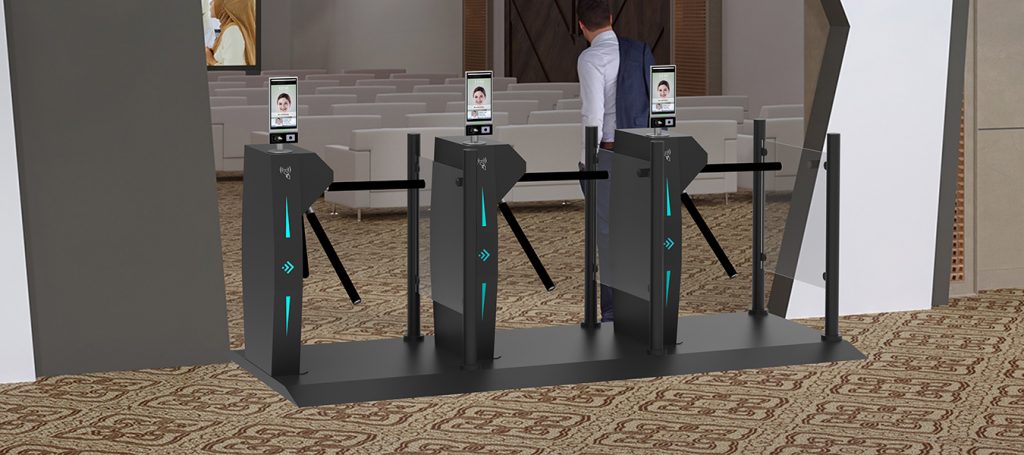
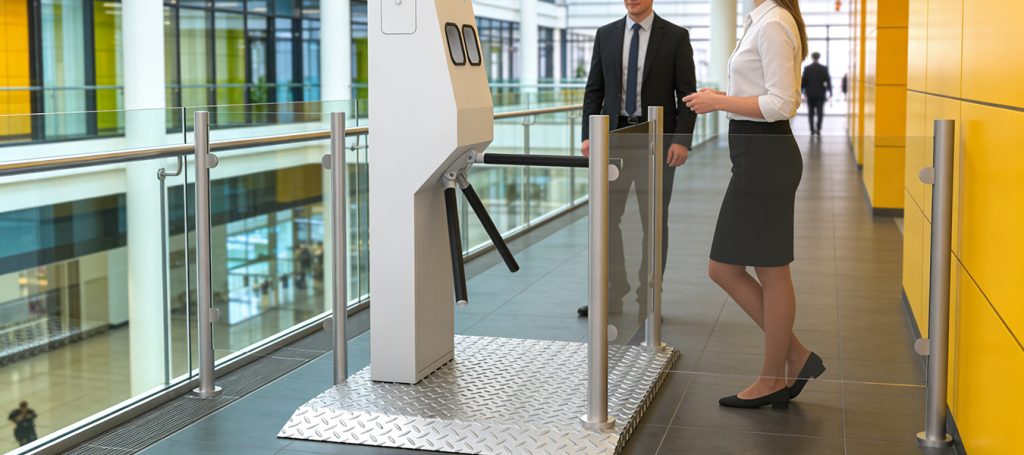
The most widely used portable model. It uses three rotating arms to allow one person per verified access. Compact size, light weight and low power consumption. Suitable for basic crowd counting and entry control at temporary sites. It balances cost and security.
2. Portable Full Height Turnstile
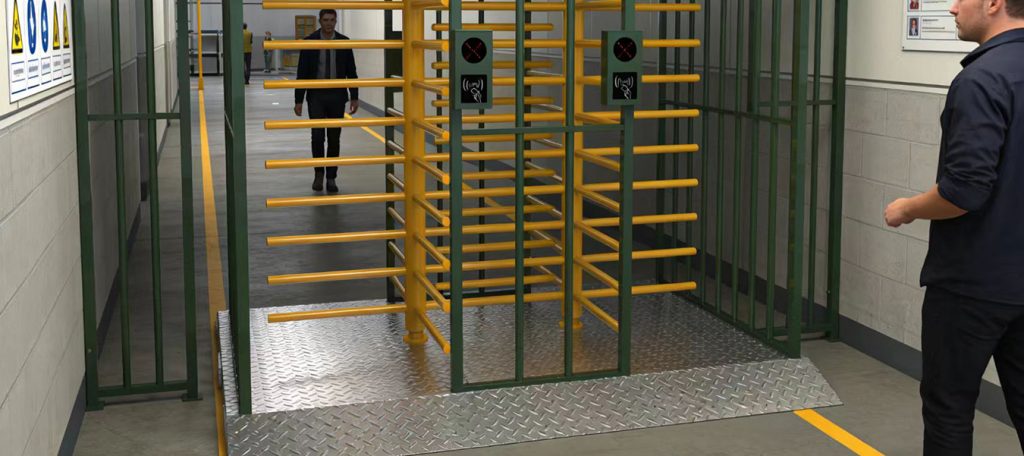
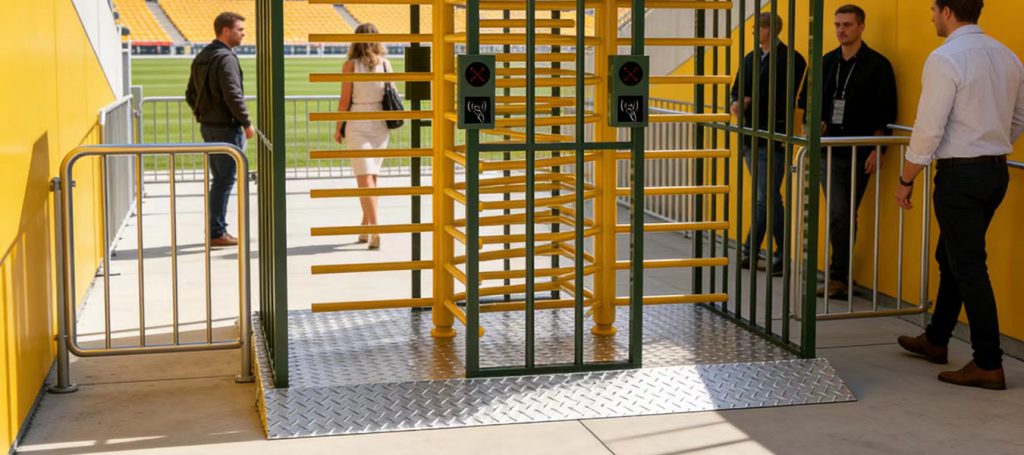
A heavy-duty portable security option. The full-height security gate turnstile prevents climbing over or crawling under the gate. It delivers much higher anti-intrusion performance. It is commonly selected for high-security temporary locations such as construction yards and temporary detention camps. It is heavier than tripod versions but still mounted on lockable mobile bases.
3. Portable Swing Turnstile
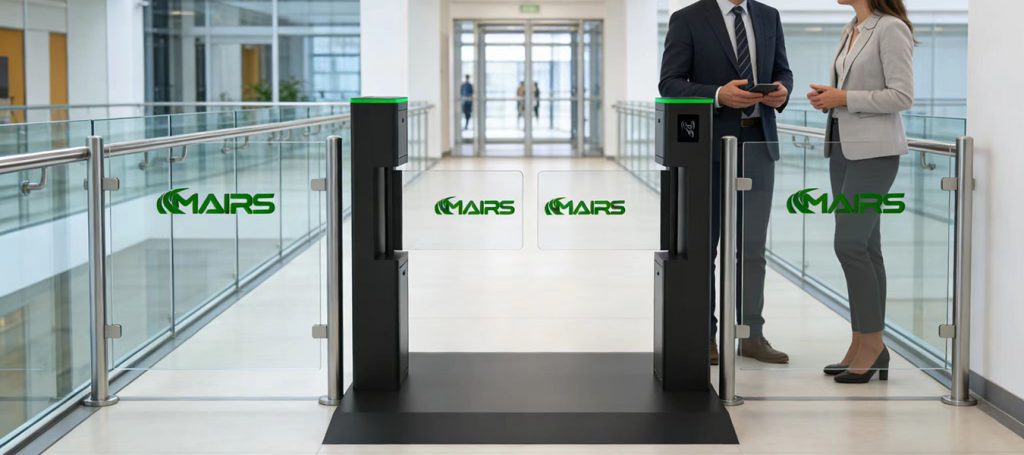
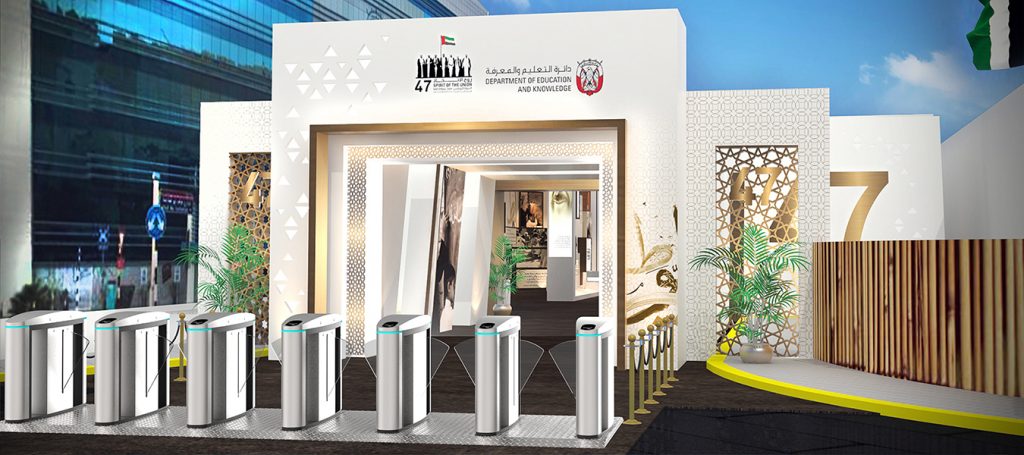
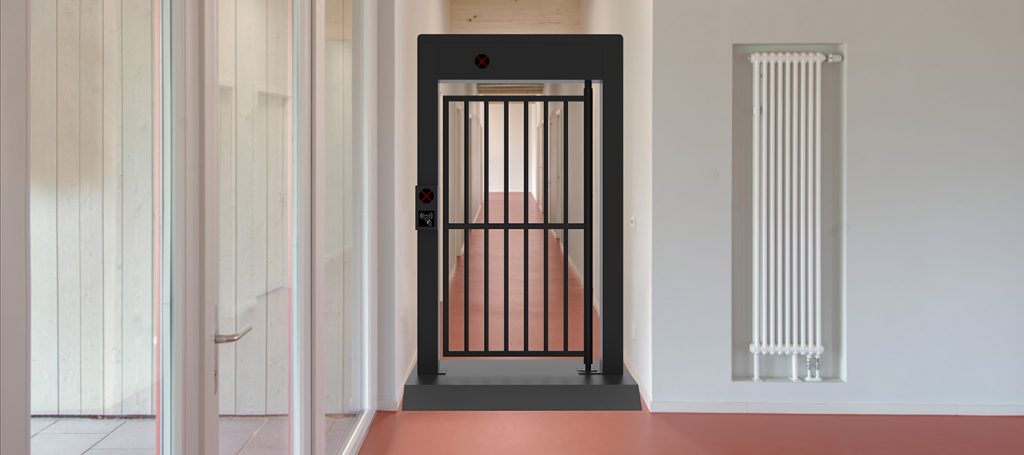
Equipped with a swing barrier gate turnstile. Wider passage width, compatible with wheelchairs, trolleys and carrying equipment. Smooth and quiet operation. Ideal for exhibitions, sports events and temporary entrances where large items or disabled access are required.
Understanding Portable Turnstile Pricing
Portable turnstile costs range from $550 for basic entry-level models to upwards of $8,500 for heavy-duty, dual-lane systems. Because portable turnstiles provide flexible access control without requiring permanent infrastructure, their pricing depends heavily on size, structural capacity, and transportability features.
The breakdown below highlights the primary tiers of portable turnstile pricing, followed by key factors that can add to the total cost. Portable turnstile costs vary widely based on type, materials, and features:
| Turnstile Type | Price Range (USD) | Key Features / Target Use Case |
|---|---|---|
| Basic portable tripod turnstile | $550 – $850 | Entry-level models (often from Chinese manufacturers); minimal features; ideal for basic budget events. |
| Mid-range portable turnstiles with wheels | $1,500 – $2,800 | Equipped with integrated wheels for easy rolling; balance of mobility and reliable mid-level security. |
| Portable Full-Height Single Lane | $3,000 – $6,500 | Heavily built; features forklift-ready bases for rapid deployment and extra-wide passages for convenience. |
| Portable Full-Height Tandem (Dual-Lane) | $8,500+ | Dual-lane capacity for heavy foot traffic; heavy-duty perimeter construction optimized for industrial or high-security sites. |
These figures represent equipment costs only and do not include optional accessories such as battery backup, cold-weather packages, card reader enclosures, or installation.
Key Hardware Components
- Mobile base & lockable casters: The base provides counterweight to keep the turnstile stable. Casters support movement; after positioning, the wheel locks stop sliding during operation.
- Power supply system: Dual power modes: AC mains power for long-time continuous running, rechargeable lithium battery for off-grid temporary use.
- Body material: Main housing usually adopts brushed stainless steel, anti-rust, scratch-resistant and easy to clean, suitable for outdoor temporary environments. Some lightweight models use reinforced aluminum alloy.
- Control board & sensor set: The core controller communicates with access readers, infrared sensors and alarm modules to govern barrier movement and safety logic.
Working Principle
The portable turnstile works on a simple access verification logic.
- A user presents valid credentials (QR code, card, biometrics) to the reader.
- The control board verifies permission. If approved, it sends a signal to unlock the mechanical barrier.
- Sensors detect the user passing through the channel. Once passage is completed, the turnstile automatically resets to the locked state for the next user.
- If tailgating, unauthorized access or emergency signal is detected, the system triggers alarms or activates emergency release.
The whole mechanical and electronic system is mounted on the weighted mobile base, so all functions run without fixed ground anchors.
Core Features of Portable Turnstile
- Foundation-free installation: No civil engineering or ground anchoring. Place the unit on level ground, lock the casters, and finish deployment. Greatly cuts installation time and site restoration costs.
- Optional battery power supply: Besides standard AC power input, most mobile turnstiles support built-in rechargeable batteries. It can keep working for hours or days at sites without stable mains electricity. Automatic switch between AC and battery power is available on premium models.
- Compatible with access control readers: It can integrate with RFID card readers, QR code scanners, fingerprint or face recognition modules. Access credentials trigger gate opening, supporting access whitelist management.
- Anti-tailgating detection: Infrared sensors detect tailgating behavior. If a second person tries to sneak in behind an authorized user, the system triggers an alert and keeps the barrier locked.
- Emergency release function: For fire or emergency evacuation scenarios, the turnstile can be unlocked manually or automatically. Barriers release to allow free outbound passage, meeting fire safety requirements.
- Throughput Rate: Passing capacity measured in people per minute, match it to your expected peak‑hour pedestrian volume.
- Environment Rating: IP protection grade for outdoor‑ready mobile turnstiles, especially for sites exposed to rain, dust, and temperature fluctuations.
Common Application Scenarios for Portable Turnstiles
Portable turnstiles serve any scenario requiring temporary or relocatable pedestrian access management:
- Events & Festivals: Concerts, sports tournaments, trade shows, expos, and pop‑up fairs. Control ticket validation, cut queue times, and prevent unauthorised entry without permanent gate builds.
- Construction Sites: Track worker attendance, manage site access, keep visitors out of hazardous zones. Portable full‑height turnstiles are widely used here for robust site security across changing project phases.
- Exhibitions & trade shows: Temporary entrance control for exhibition halls, ticket verification, visitor counting. Portable swing turnstiles are preferred for wide access and quick setup.
- Temporary Work Zones & Remote Facilities: Mining sites, field camps, disaster‑relief bases, and temporary office compounds.
- Pop‑Up Venues & Seasonal Locations: Seasonal fairgrounds, temporary exhibition halls, and seasonal retail premises.
- Emergency & Short‑Term Security: Rapid access‑control deployment for special gatherings, temporary checkpoints, and short‑term facility upgrades.
Why use Portable Turnstiles
1. Fast Deployment & Zero Civil Engineering
Traditional turnstile installation demands floor cutting, wiring work, and days of on‑site labor. Portable turnstiles ship mostly pre‑assembled. One or two staff members can finish setup within an hour, perfect for short‑notice events or rotating job‑site locations. After use, you can pack, transport, and reuse the equipment for future projects.
2. Cost‑Effective for Temporary Needs
Renting or buying mobile turnstiles avoids high construction costs for sites that do not need permanent security infrastructure. For project‑based operations, re‑usable portable units deliver much better ROI compared to building fixed access gates for short‑term use.
3. Flexible Site Adaptability
You can re‑position portable turnstiles as site layouts change: shift entry points for festival crowd flow, move gates across different construction zones, or relocate access lanes for trade‑show floor adjustments. Many models support both single‑direction and bi‑directional passage settings to match real‑world traffic patterns.
4. Reliable Security & Anti‑Tailgating
Quality mobile turnstiles retain core security features. Mechanical and electronic anti‑tailgating mechanisms stop piggybacking and unauthorised follow‑in, ensuring only one person passes per valid credential. Full‑height portable turnstiles offer higher‑security protection for construction yards and restricted work areas, while portable tripod turnstile gates balance security and throughput for public‑facing events.
5. Multiple Power Options
Premium portable turnstile systems support AC mains power, built‑in rechargeable battery packs, and even solar-powered configurations for remote outdoor locations with no grid power. Battery‑driven units can run for many hours on a single full charge, ideal for outdoor festivals and remote job sites.
Portable Turnstile vs Fixed Turnstile: Which Should You Choose?
Choose a portable turnstile if:
- Your access‑control requirement is temporary or project‑based
- You cannot drill or modify existing floors
- You need to move gates between multiple locations
- You want fast installation and quick dismantling
Choose a fixed turnstile if:
- You need permanent access control for a static building entrance
- High‑volume 24/7 operation is permanent
- The site allows civil construction and ground anchoring
Portable turnstiles are not always a replacement for fixed gates. Many businesses combine both: fixed gates for main building entrances, plus mobile turnstiles deployed for events and temporary site zones.
Frequently Asked Questions
Q: Can portable turnstiles work outdoors?
A: Yes. Select models with proper IP weather‑resistance ratings. Battery‑powered temporary turnstiles perform well for outdoor events, while heavy‑duty portable full‑height units suit industrial outdoor sites. Provide shelter against direct heavy rain for electronics if the location is fully exposed.
Q: How long does it take to set up a portable turnstile?
A: Most factory‑pre‑assembled portable turnstiles can be positioned, powered on, and configured within 30‑60 minutes. Complex multi‑lane systems with external access‑control software integration will take extra time.
Q: Are portable turnstiles secure enough to stop unauthorised entry?
A: Modern mobile turnstiles include mechanical barriers plus electronic anti‑tailgating sensors. Portable full‑height models deliver security comparable to fixed full‑height turnstiles. For best results, select well‑built units instead of lightweight low‑cost alternatives.
Q: Can I customise portable turnstiles?
A: Yes. Most manufacturers offer custom lane width, reader mounting plates, colour finishes, and special‑function modules for project‑specific temporary‑access requirements.
Q: Do portable turnstiles need a concrete foundation or drilling?
A: No. One core advantage of temporary turnstiles is foundation‑free deployment. They rely on weighted mobile bases for stability. No concrete pouring, anchor bolts or floor drilling is required. Just place the unit on flat ground and lock the casters.
Q: Can I connect portable turnstiles to my existing access control system?
A: Yes. Portable turnstiles support common access interfaces such as dry contact, RS‑485 and TCP/IP. They can integrate with RFID readers, QR scanners, fingerprint and facial recognition devices to match your existing access management software.
Q: What portable turnstile type is best for construction sites?
A: Portable tripod turnstiles are cost‑effective for regular worker attendance management. For higher security against climbing or trespassing, choose portable full‑height turnstiles. Both types adapt well to outdoor construction‑site environments.
Q: Are portable turnstiles suitable for wheelchair access?
A: Portable swing turnstiles (swing gates) offer wider passage widths, supporting wheelchairs, trolleys and large‑size goods. Portable tripod and full‑height turnstiles have narrow channels and cannot accommodate wheelchair users.
Q: When should I pick fixed turnstiles instead of portable ones?
A: Choose fixed turnstiles if you need permanent, high‑duty‑cycle access control for years‑long operation. Fixed units deliver higher mechanical durability for heavy daily traffic. Mobile turnstiles excel for temporary, relocatable projects.
Conclusion
Portable turnstiles fill a critical gap in modern security infrastructure, bringing robust access control to sites where permanent gates are impractical or unnecessary. Whether you organise public events, manage construction projects, or operate rotating temporary facilities, a well‑selected temporary turnstile reduces setup complexity, cuts total costs, and maintains reliable pedestrian security wherever you need it.
When comparing suppliers, focus on build quality, mobility performance, power flexibility, and system‑integration capability to pick portable turnstiles that match your real‑world temporary‑access scenarios.