
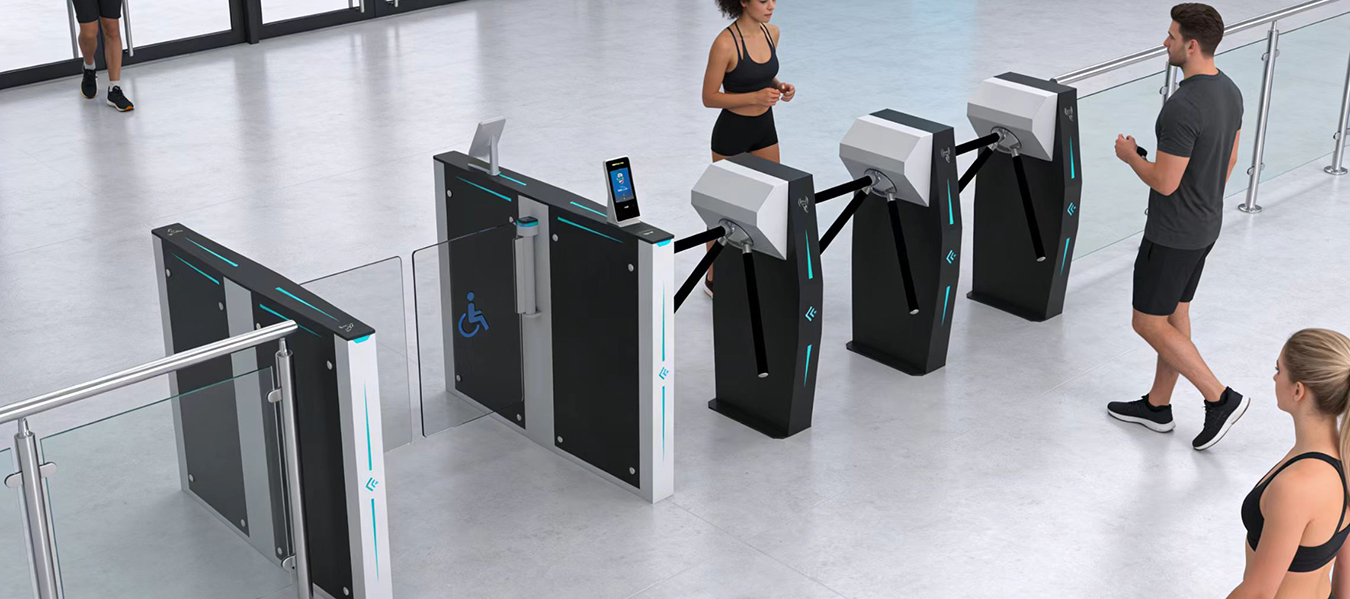
What exactly is a turnstile gate with card reader?
A turnstile gate with card reader is one of the most trusted pedestrian access control devices for modern facilities, combining a physical turnstile barrier with an integrated card verification module to regulate who can enter restricted zones. It is widely chosen by businesses that want balanced security, smooth visitor flow, and simple attendance logging, without the high complexity of full biometric-only systems.
At its core, this system works in a straightforward way. Authorized users tap or swipe an ID card, IC card, RFID proximity card or key fob on the built-in card reader. The reader sends credential data to the access control controller for instant validation. If the card is valid and has active permission, the turnstile gate with card reader unlocks to allow one person through. If the card is invalid, expired, or blocked, the gate stays locked and often triggers a local alert. Every access event is automatically recorded, including user ID, date, time, entry direction and verification result, which makes auditing and staff attendance tracking much easier.
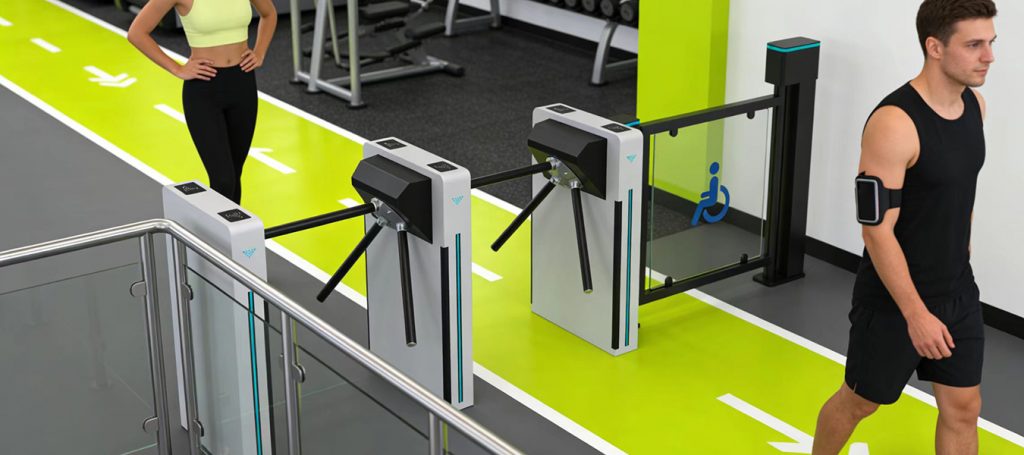
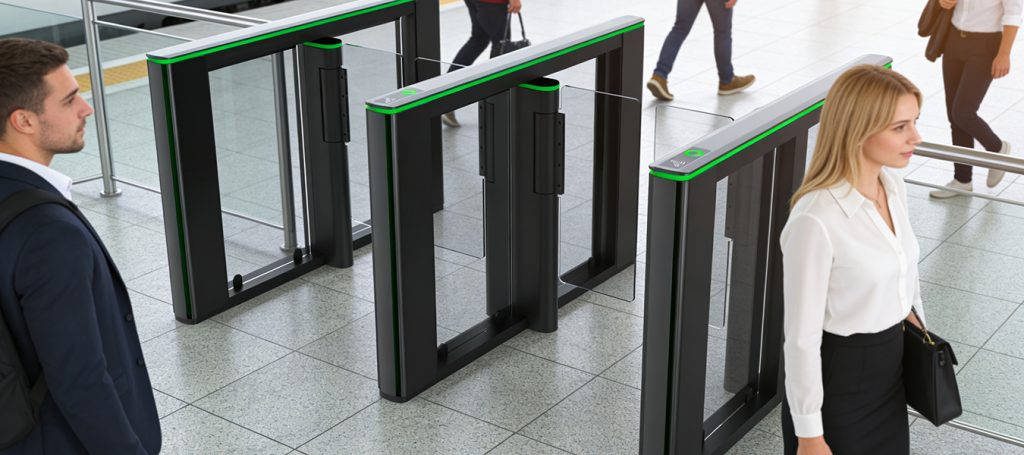
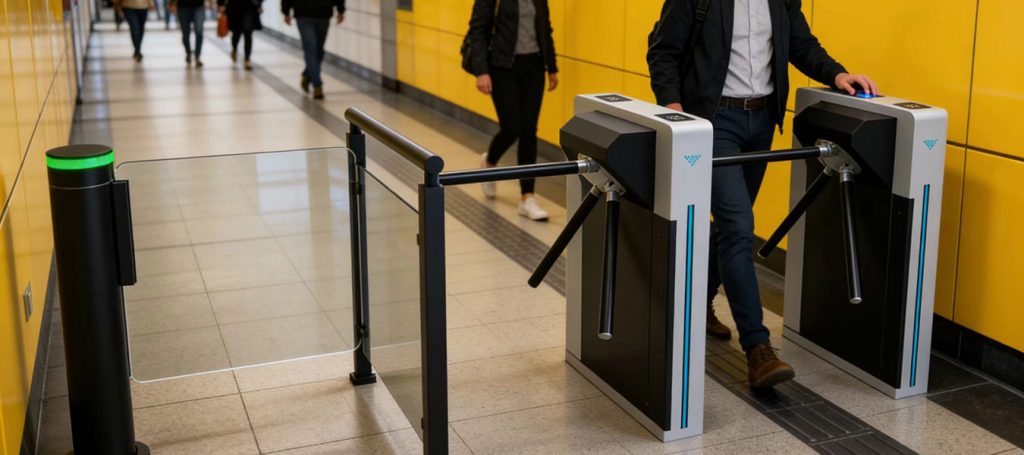
There are several common styles of turnstile gates fitted with card readers to match different site requirements. Tripod turnstile gate with card readers are the budget-friendly, rugged option, popular for construction sites, factories, campuses and stadiums. Flap barrier turnstiles (also called flap gates) look cleaner and quieter, fitting office lobbies, gyms and commercial buildings. Speed gates / swing turnstiles deliver faster passing speed for high-traffic entrances such as metro stations and corporate headquarters. Full-height turnstile gate with card readers offer maximum anti-climb protection for prisons, data centers and secure industrial compounds. Most models use 304 or 316 stainless steel housings, resisting scratches, rust and daily wear for both indoor and covered outdoor installation.
How It Works: Four Components, One Sequence
Every turnstile gate with card reader system, regardless of the gate type, runs on the same four-part architecture. Understanding these components makes it easier to evaluate compatibility, plan an installation, and troubleshoot when something behaves unexpectedly.
The credential reader is the user-facing component. In most deployments this is an RFID card reader, though modern systems increasingly support mobile credentials, QR codes, and biometric verification alongside or instead of cards. A well-matched reader sets the pace for the entire lane: a rapid RFID reader can identify a credential in roughly 300 milliseconds, while a barcode or QR scan may take slightly longer.
The access controller is the decision-maker. It receives the credential signal, checks it against a permission list, and sends an open or deny command to the gate. Controllers can be standalone—permissions stored locally on the device—or networked, with a central server or cloud platform managing multiple lanes and locations.
The barrier mechanism is the physical gate hardware: rotating tripod arms, retractable flap panels, swinging glass wings, or a full-height rotor. This is the part users see and touch, and its design determines passage width, throughput speed, and the level of physical deterrence.
Management software is where administration happens. Managers add or remove users, set time-based permissions, pull entry reports, and receive alerts. Cloud-based platforms have made remote management possible without on-site servers, which matters for multi-site operations.
The operating sequence itself is straightforward: a user presents a credential, the controller validates it, the barrier unlocks and opens, the user walks through, sensors confirm passage, and the barrier locks again. The elegance of the system is that this sequence repeats reliably, lane after lane, hour after hour, without variation.
Turnstile Gate with Card Reader: Key Advantages for Reliable Pedestrian Access Control
A turnstile gate with card reader has become one of the most popular access control solutions for offices, factories, construction sites, gyms, schools and commercial premises. It combines physical barrier control and RFID card verification, bringing outstanding security, operational efficiency and long-term value to facility managers. Compared with simple card readers, unlocked doors or manual security checks, this integrated turnstile gate with card reader solution delivers clear, measurable advantages.
1. Strong Anti-Tailgating & Anti-Passback for Higher Security
This is its biggest advantage. A standalone card reader cannot stop people from following closely behind an authorized user, but the turnstile’s physical barrier plus infrared sensors enforce the rule: one valid card, one person. After a successful card tap, the turnstile gate with card reader only unlocks for a single passage and locks again automatically. If a second person tries to sneak in, the system triggers an alarm and records the tailgating attempt.
It also supports anti-passback functions to prevent users from passing their card back to outsiders for repeated entry. This effectively blocks credential sharing, unauthorized follow-in and unregulated entry, which is critical for high-security zones such as data centers, workshops and construction sites. Tripod turnstiles, flap barriers and full-height turnstile gate with card readers all provide different levels of anti-climb and anti-breach protection to match your security requirements.
2. Fast, Stable and User-Friendly Passage
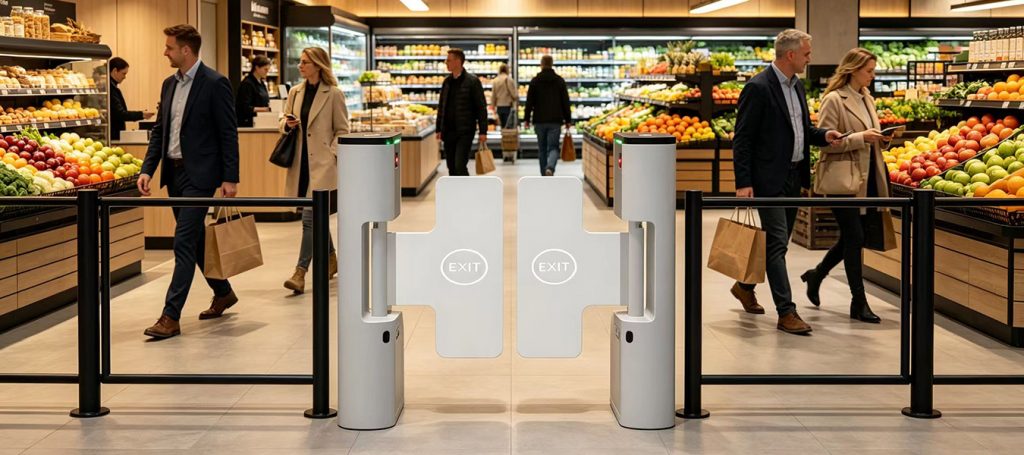
Card verification is instant. Most RFID card readers finish validation within 0.2–0.3 seconds, so users only need to tap their IC, ID or Mifare card lightly to pass through. The passing speed can reach 30–55 people per minute, making it ideal for morning peak hours in office buildings and busy gym entrances.
The operation is intuitive. No complicated training is required for staff, contractors or visitors. Unlike biometric devices that may fail due to wet fingers, masks or lighting issues, card readers work reliably in nearly all conditions. Modern models run smoothly with low noise, equipped with infrared anti-pinch sensors to avoid injury or damage to bags and clothing during passage.
3. Flexible Permission Management & Complete Access Audit Logs
All card access data is sent to the access control software, so administrators can manage permissions remotely from a central dashboard. You can quickly activate new cards, revoke access for resigned staff, set time-limited access rules, or restrict certain cards to specific zones and entry times. There is no need to replace physical keys or locks, which saves huge management workload.
Every access event is automatically logged: card ID, time, entry direction, verification result and abnormal alerts. These records can be exported directly for attendance reports, security audits and incident tracing. For construction sites and campuses, this function perfectly supports real-name registration and attendance statistics without extra recording work.
4. Excellent System Compatibility & Scalable Upgrades
Turnstile gate with card readers adopt standard communication protocols including Wiegand, RS485 and TCP/IP, so they can connect seamlessly with most existing access control, attendance, CCTV and alarm systems. You do not need to replace your current management platform.
The design is modular. You can keep the card reader as the main verification method and add QR scanners, fingerprint or face recognition modules later on the same turnstile, upgrading to multi-factor authentication when your security needs grow. You can also add more lanes gradually when pedestrian flow increases, without rebuilding the whole system.
5. Low Long-Term Cost & Durable Construction
Most turnstile housings are made of SUS304 or SUS316 stainless steel, scratch-resistant, rust-proof and suitable for indoor or covered outdoor environments. The mechanical structure is mature with a low failure rate, which greatly reduces maintenance frequency and after-sales costautogatefa…. RFID cards are cheap to produce and replace, far more cost-effective than biometric enrollment or frequent security guard patrols.
It also cuts labor costs. With the turnstile gate, you no longer need security staff to check credentials one by one at the entrance. Security manpower can be redeployed to focus on patrol and emergency response instead of repetitive checking work.
6. Reliable Safety Design for Emergency Compliance
Safety is built into the core design. When receiving fire alarm signals or during power failure, the turnstile barriers automatically unlock or drop arms to allow free evacuation, complying with fire safety codes in most regions. LED indicator arrows clearly show valid or invalid passage status, reducing confusion at crowded entrances.
7. Wide Application Flexibility for Different Sites
You can select the right turnstile type according to your site:
- Tripod turnstile with card reader: cost-effective, rugged for construction sites, factories and stadiums
- Flap barrier/speed gate with card reader: elegant, quiet for office lobbies, commercial buildings and gyms
- Full-height turnstile with card reader: maximum anti-climb security for data centers and high-security industrial areas
Common Application Scenarios
- Office buildings & business parks: Manage employee entry, restrict visitor access and automate working-hour attendance records.
- Construction sites: Connect with real-name worker registration systems, only letting registered workers pass the site gate.
- Gyms, leisure clubs and stadiums: Control member-only entry and prevent non-members from entering facilities.
- Schools and universities: Link with campus student ID cards to secure dormitories, labs and teaching buildings.
- Factories and industrial plants: Separate public areas from production workshops and sensitive storage zones.
- Residential compounds: Add an extra security layer for residents while supporting temporary visitor cards.
- Data centers and secure facilities: Pair full-height turnstile gate with card readers for high-level perimeter access control.
Important Factors When Buying a Turnstile Gate with Card Reader
First, confirm card protocol compatibility. Check whether the reader supports 125KHz ID cards, 13.56MHz IC cards (Mifare) or custom encrypted RFID cards to match your existing access cards, if you already have a card system running.
Second, select the right turnstile type according to traffic volume and security level. Tripod turnstiles suit low-to-medium traffic and tight budgets; flap and speed gates work for high-traffic premium lobbies; full-height turnstiles are for high-security anti-climb needs.
Third, pay attention to installation environment. Choose 316 stainless steel and an IP-rated reader if the gate will be placed outdoors or in humid, coastal areas. Indoor office use usually works well with standard 304 stainless steel.
Fourth, verify integration support. Look for open communication protocols such as Wiegand, RS485 or TCP/IP, so the turnstile gate with card reader can connect smoothly with your existing access software, CCTV, alarm and attendance platforms.
Last, check safety features: anti-pinch infrared sensors, emergency release, tamper alarms and power-off unlock functions. These details prevent injury and help you meet local safety regulations.
FAQ
Q: Can I use my existing RFID cards on a new turnstile gate with card reader?
A: It depends on the card frequency and reader protocol. 13.56MHz Mifare cards are widely supported. You should share your current card information with the supplier to test compatibility before ordering.
Q: Does a turnstile gate with card reader need to connect to a computer all the time?
A: Many controllers can work offline, storing white lists locally. Access logs will be saved and uploaded once the network recovers. Real-time management requires a stable network connection.
Q: Can it stop tailgating perfectly?
A: Modern turnstiles with infrared sensors greatly reduce tailgating risk. For extremely strict security, you can combine the card reader with face recognition or install extra surveillance cameras.
Q: What happens if the power goes out?
A: A standard-compliant turnstile gate with card reader will release the barriers automatically during power loss or fire alarm triggers for safe evacuation.
Conclusion
A turnstile gate with card reader remains one of the most cost-effective, mature pedestrian access control choices for facility managers. It delivers tangible security gains by enforcing one-person-per-entry rules, keeps entry lines moving smoothly, and gives you clear audit logs for every access attempt. Whether you are upgrading an old entrance or designing a brand-new security system for an office, gym, factory or school, a turnstile gate with card reader balances security, convenience and long-term reliability.
If you need a tailored setup, you can select the mechanism style, card reading frequency, housing material and extra modules such as QR scanners or biometric readers to build an access system that fits your site exactly.